Rack Supported Mezzanine Systems Texas & Pick Module Systems for High-Density Warehouses
Texas warehouse and distribution center operators face a familiar tension: SKU counts keep climbing, throughput targets keep rising, and the building footprint stays the same. Rack-supported mezzanine systems and pick modules offer a practical path forward, turning unused vertical space into productive storage and picking capacity without breaking ground on a new facility. This guide covers how these systems work, when they make sense, and what Texas facility managers need to consider before committing to a project.
Key Takeaways
Rack-supported mezzanine and pick module systems help Texas warehouses and distribution centers add multi-level storage and picking capacity without expanding their building footprint. By using heavy-duty pallet racking as both storage and structural support, these systems can double or triple usable square footage within the same area, placing inventory closer to workers and reducing travel time across the facility.
Integrity Material Handling Systems Inc. ("Integrity") designs, engineers, supplies, and installs turnkey rack-supported mezzanine systems, pallet rack, and pick modules for facilities across Texas - from Houston and Dallas–Fort Worth to San Antonio and the I-35 / I-45 logistics corridors. With operations in New Jersey and Texas, Integrity serves customers nationwide with a focus on creating cohesive, code-aware storage solutions rather than selling isolated components.
These solutions can increase SKU density, improve first in / first out picking, and make smarter use of vertical space with integrated pallet flow, carton flow, shelving, and conveyor options. Whether you need a single mezzanine level for archive storage or a full multi-level pick module for high-velocity order fulfillment, the system is engineered around your inventory, workflow, and throughput requirements.
Integrity provides full project support:
- Layout and CAD design services
- Engineering and permitting coordination
- Professional installation
- Reconfiguration and relocation services
- Ongoing rack safety assessments
If you are considering a rack-supported mezzanine or pick module project in Texas, call (201) 848-0054 or contact Integrity online early in your planning process to discuss your facility, storage goals, and operational needs.
What Is a Rack-Supported Mezzanine System?
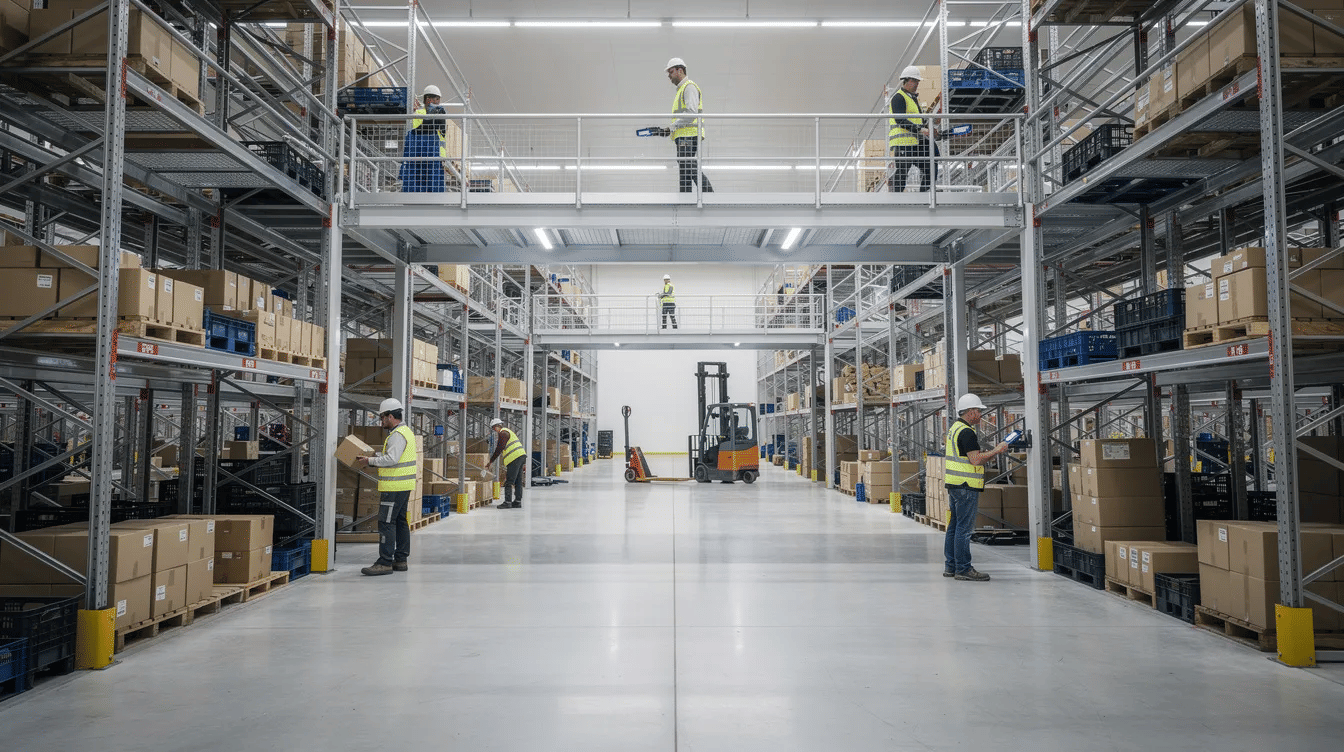
A rack-supported mezzanine system is a mezzanine deck built directly on heavy-duty pallet rack uprights and beams, creating one or more elevated work and storage levels within a warehouse or distribution center. The pallet rack itself serves as the structural support for the mezzanine floor, walkways, and guardrails. Say goodbye to separate structural columns - the racks support the mezzanine directly, which is a fundamental distinction from freestanding mezzanines that rely on independent steel columns.
Structural Features
Rack supported mezzanines utilize heavy-duty pallet racking to create multi-level platforms for storage and order picking. The design of mezzanines incorporates heavy-duty upright frames for robust support, and using existing pallet racks as structural support reduces costs and installation time compared to building an entirely separate elevated structure. Decking options include bar grating, steel panels, or composite materials, depending on load requirements and fire protection considerations.
Typical Applications
Many Texas warehouses use rack-supported mezzanines for e-commerce and order fulfillment, but applications extend well beyond shipping boxes. Typical uses include:
- Small-parts storage
- Case picking
- Carton flow zones
- Light assembly
- Returns processing
- Archive storage on upper levels
- Employee areas within warehouses (quality control stations, supervisor offices)
Engineering Considerations
Structural requirements, decking type, stair configurations, and guardrail specifications all depend on the intended live loads and dead loads, the equipment operating on each level, and applicable building and fire codes. Integrity evaluates these factors on a project-by-project basis, helping ensure that the system is appropriately engineered for its intended use.
Why Texas Warehouses Turn to Rack-Supported Mezzanines
Texas sits at the center of some of the busiest logistics corridors in the country, and the state's industrial warehouse inventory now exceeds approximately 1.8 billion square feet, growing by roughly 51 million square feet year-over-year. In high-demand logistics hubs like Dallas–Fort Worth, Houston, Austin–San Marcos, San Antonio, El Paso, and Laredo, maximizing vertical space is crucial for warehouse operations. Texas warehouses often use rack-supported mezzanines to avoid expansion costs, leaning on their existing clear height rather than negotiating new leases or building additions.
Key Advantages
- Reclaiming unused vertical space. Elevated platforms using rack support reduce space wasted by overhead air. A facility with 30 or 36 feet of clear height can gain one or two additional levels of productive storage without touching the building envelope.
- Avoiding or postponing facility expansion. High-density configurations increase storage density within limited footprints, deferring the cost and disruption of moving to a larger building.
- Consolidating inventory by velocity. Slow- and medium-velocity SKUs move to mezzanine storage levels, opening ground-level floor space for fast movers, staging, and cross-docking.
Rack supported mezzanines maximize vertical space in warehouses, and these systems improve storage density and operational organization across the facility. Multi-level platforms support higher SKU density while maintaining safe travel paths and pick aisles, reducing congestion and travel time in large distribution operations.
Rack-Supported Mezzanines vs. Freestanding Mezzanines
Rack-supported mezzanine systems and freestanding mezzanines both create elevated levels, but they differ in how the load reaches the floor. Freestanding mezzanines use independent structural columns and beams - the storage below is separate and does not carry the deck. Rack-supported designs eliminate those independent columns, using the pallet rack framework as the load path for both the stored goods and the mezzanine level above.
Comparison Table: Rack-Supported vs. Freestanding Mezzanines
| Feature | Rack-Supported Mezzanine | Freestanding Mezzanine |
|---|---|---|
| Structural Support | Uses pallet rack as support for deck and storage | Uses independent columns and beams |
| Storage Below | Integrated with racking | Open, flexible use |
| Cost | 20–50% less per sq. ft. when racking is part of the plan | Higher, especially for heavy loads or open space |
| Flexibility | Best for dense racking and picking | Best for open staging, offices, or heavy equipment |
| Load Capacity | Engineered for storage and picking | Can be engineered for heavier loads (e.g., forklifts) |
| Typical Use | High-density picking, integrated storage | Staging, in-plant offices, maintenance, equipment crossovers |
Integrity's design services compare both approaches for each Texas facility, accounting for clear height, slab capacity, fire protection, travel paths, and long-term flexibility. Neither option is one-size-fits-all. Load capacities, column spacing, and permitted uses must be engineered around the specific building, applicable codes, and intended material handling functions.
Designing High-Density Rack-Supported Pick Modules
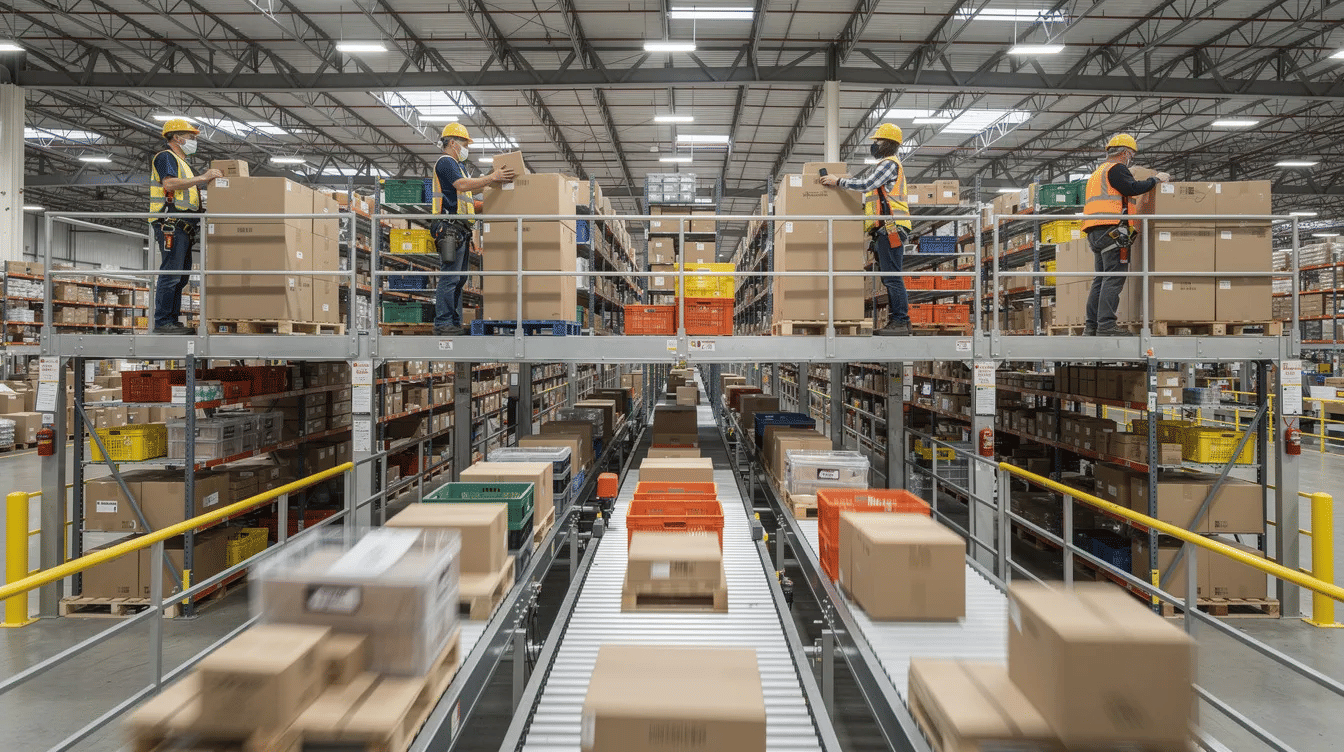
Pick modules are multi-level rack-supported mezzanine systems designed specifically around order picking and fulfillment. They typically combine pallet racking, carton flow, pallet flow, conveyors, shelving, and walkways into a tightly integrated system where every square foot of available space is working to create dense storage within the structure.
Configuration Elements
- Pallet reserve storage at the upper or rear levels for replenishment
- Carton flow and shelf picking at the pick face for case and each-pick operations
- Conveyor or tugger lanes running along pick aisles to move completed orders to pack-out
- Sortation systems integrated at ground level for downstream processing
SKU Density and Workflow Optimization
Integrity designs pick modules to increase SKU density while grouping SKUs by velocity, reducing travel distance for pickers in busy Texas e-commerce, retail replenishment, and subscription-box operations. Pick modules can accommodate hundreds to thousands of SKUs within a single structure, and multi-level designs in pick modules maximize cubic space so that more product is accessible within a shorter walk.
Labor and Efficiency Benefits
Pick modules can cut travel time by up to 50% and can reduce labor costs by as much as 40% by consolidating pick locations and eliminating redundant walking. They allow multiple loading and unloading locations simultaneously, supporting zone, batch, and wave picking strategies across several levels.
Inventory Workflow and Fulfillment Productivity
Rack-supported mezzanines optimize inventory workflow by placing goods closer to workers, and they can support a mix of bulk storage and hand-picking operations simultaneously - full pallet replenishment happens at the back while each-pick or case-pick faces stay loaded at the front to support an efficient picking process. Pick modules enhance fulfillment productivity by consolidating pick locations into a dense, ergonomic footprint.
First In / First Out (FIFO) Product Rotation
For operations where first in / first out product rotation is critical - such as food, beverage, and pharma distributors around Houston and DFW - pallet flow and carton flow lanes maintain FIFO discipline automatically. First in, first out rotation happens by gravity, ensuring order accuracy and lot control without manual intervention.
Integration with WMS and Automation
Integrity's engineers and project managers coordinate pick-module layouts with WMS, WCS, and automation partners where applicable, helping ensure that the storage design supports overall throughput targets.
Integrating Pallet Flow, Carton Flow, and Drive-In Storage
The most effective mezzanine rack system designs treat racking, flow lanes, and access paths as one integrated material handling solution rather than separate purchases bolted together after the fact.
Pallet Flow Rack
Pallet flow rack is a gravity-fed storage method well suited to first in / first out inventory rotation and high-turn SKUs. Palletized loads are loaded at the back and roll forward to the pick face, keeping replenishment and picking on separate aisles. Pallet flow racking can be embedded under or beside rack-supported mezzanines, feeding ground-level pick or staging areas while mezzanine levels handle slower movers.
Carton Flow and SpanTrack Systems
Carton flow and SpanTrack-style systems are ideal for case and each picking in pick modules. They improve visibility, ergonomics, and access to product while supporting dense front-facing storage. Shelving supported mezzanines can expand storage above shelving units for lighter-weight, slower-moving inventory.
Drive-In and Drive-Through Pallet Rack
Drive-in or drive-through pallet rack may also be integrated into a mezzanine storage footprint when deep-lane, limited-SKU storage of pallets is needed - think bulk beverages, building materials, or seasonal inventory common in Texas manufacturing and distribution operations. Drive-in configurations allow forklifts to enter the rack structure itself, storing multiple pallets deep in a single lane.
System Configuration Considerations
The right mix of pallet flow, carton flow, selective rack, and drive-in rack depends on SKU mix, throughput targets, equipment (including pallet jacks and forklifts), and safety requirements. Integrity evaluates these variables during the layout and design phase to recommend a system configuration that supports your storage goals and operational workflow.
Planning for Multi-Level Mezzanine Storage and Floor Space Utilization
Multi-level rack-supported mezzanine systems can include two, three, or more tiers, but only when the building's clear height, slab capacity, and life-safety systems support additional levels. Adding a mezzanine level is not simply a matter of stacking steel - every tier adds weight, changes egress requirements, and may affect sprinkler coverage.
Site Analysis and Space Planning
Integrity analyzes existing floor space, obstructions such as columns, dock doors, and offices, and travel paths to determine where a mezzanine can add the most value, expand storage space, and avoid creating bottlenecks or compromising space utilization on the ground floor. In high-velocity Texas distribution centers, balancing dense mezzanine storage with essential ground-floor operations - staging, packing, returns, cross-docking - is a critical design consideration.
Data Needed for Effective Planning
To model how many levels and what bay configurations are practical, facility teams should share:
- Current and projected SKU counts
- Cube per SKU and velocity profiles (fast, medium, slow movers)
- Throughput and order fulfillment targets (lines per hour, orders per shift)
- Equipment in use (pallet jacks, forklifts, conveyors, lifts)
- Any planned changes to product mix or fulfillment strategy
The goal is to maximize the existing space - vertically and horizontally - while maintaining efficient flow on every level. If you are considering a multi-level mezzanine or pick module in Texas, call (201) 848-0054 or send Integrity a project brief online for a tailored concept layout.
Safety, Codes, and Engineering Considerations in Texas
Rack-supported mezzanines are engineered structures. They must be designed and installed to meet applicable building, fire, and safety codes, which can vary by Texas municipality and by facility conditions. Quality rack-supported systems can accommodate localized safety criteria, but only when those criteria are identified and addressed during design.
Key Engineering Factors
- Slab capacity. Concrete thickness, reinforcement, and strength must support concentrated column loads from rack uprights and mezzanine decking, including both static and dynamic loads.
- Height-to-depth ratios. Rack uprights that exceed a 6:1 height-to-depth ratio generally require additional anchoring or bracing.
- Anchoring. Base plates, anchors, and shims must be specified for the slab conditions and load ratings involved.
- Seismic considerations. While Texas is not typically classified as a high-seismic zone, some regions and some AHJs do require seismic analysis. California's seismic regulations influence the engineering of mezzanine systems nationwide, and standards like ASCE 7 apply broadly.
- Load ratings. Both live loads and dead loads for the rack and decking must be established and documented. Local permitting involves assessing clear heights and load capacities before installation.
The goal is to maximize the existing space - vertically and horizontally - while maintaining efficient flow on every level. If you are considering a multi-level mezzanine or pick module in Texas, call (201) 848-0054 or send Integrity a project brief online for a tailored concept layout.
Code Compliance and Safety Standards
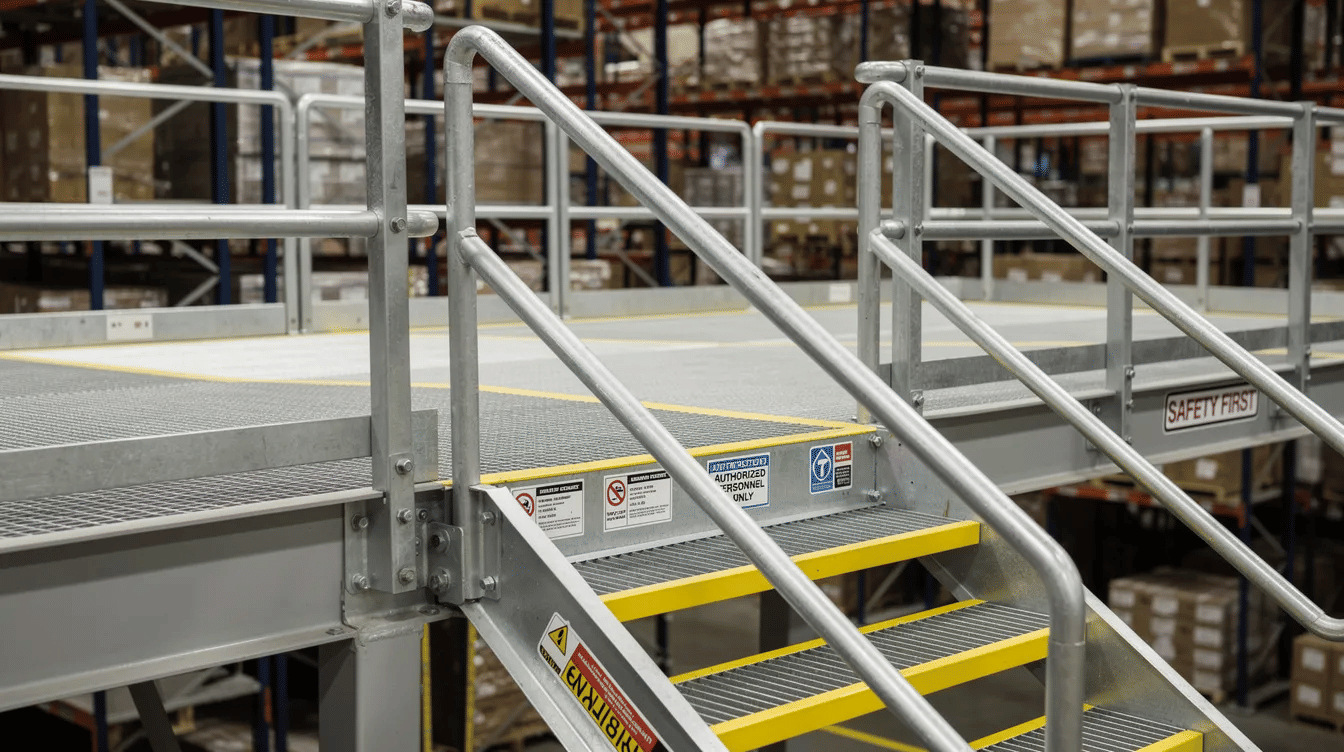
Mezzanine systems must comply with local building codes and safety standards, including IBC §505, which limits aggregate mezzanine area - typically to one-third of the room's floor area, with exceptions for certain construction types and sprinklered buildings. Integrated components include safety handrails and pallet gates for personnel access, along with kick plates, stairs, landings, and appropriate egress routes. Pallet-drop gates allow for safe material transfer between different levels.
Fire Protection and Permitting
Adjustments to fire safety systems may be needed when adding elevated platforms. Sprinkler coverage, smoke detection, and high-pile storage classifications often change when a mezzanine is installed or storage heights increase. Integrity can coordinate with licensed fire protection and electrical contractors as part of a turnkey project to ensure safety considerations are addressed alongside the structural scope.
Integrity does not guarantee permitting outcomes but supports clients with stamped drawings, seismic calculations where required, and documentation needed by local authorities having jurisdiction (AHJs) across Texas to help ensure safety and code alignment.
Integrity's Turnkey Design Services for Mezzanine Rack Systems
Integrity is a full-service warehouse storage and material handling systems provider with operations in New Jersey and Texas, serving customers nationwide. For Texas projects, the team brings familiarity with the state's major distribution markets, code environments, and the practical realities of working in active facilities.
Design Process Steps
- Discovery: Calls or site visits to understand the operation, current pain points, SKU profile, and storage goals.
- Data collection: Gathering building dimensions, clear heights, slab specs, SKU counts, velocity data, equipment lists, and throughput targets.
- Preliminary CAD layouts: Concept drawings showing mezzanine placement, rack configurations, flow media, stair and access points, and integration with conveyors or automation.
- Budgetary proposals: Cost estimates covering equipment, engineering, installation, and any permitting support.
Integrity's team evaluates options such as selective pallet rack, narrow-aisle configurations, pallet flow, carton flow, shelving, and mezzanine storage to build a cohesive rack system instead of isolated components. Modular customization allows for tailored configurations that fit specific operational needs, whether that means a two-tier archive storage mezzanine or a four-level pick module with integrated conveyor.
Integrity can source both new and used pallet racking and mezzanine components where appropriate, helping clients match system specifications and budget while still meeting engineering requirements. Engage Integrity early - before committing to a building lease or expansion plan. Call (201) 848-0054 or start a design discussion online.
Professional Installation, Relocation, and Reconfiguration
Professional installation is critical for rack-supported mezzanines and pick modules. Correct anchoring, bracing, plumb and level alignment, and adherence to engineered drawings and manufacturer specifications are not optional - they directly affect structural integrity and ensure safety for everyone working on and around the system.
Installation Capabilities
Integrity's installation capabilities in Texas include:
- Supervision and crew management for projects of varying scale
- Sequencing work around ongoing warehouse operations to minimize disruption
- Coordination with conveyor, lighting, fire protection, and sprinkler installers
- Post-installation inspections and verification against engineered drawings
Relocation and Reconfiguration Services
Rack-supported systems can be modified or relocated depending on design, and Integrity regularly disassembles, relocates, and reconfigures pallet rack and mezzanine systems when companies move between Texas facilities or re-balance storage between locations. When a system is relocated, capacities and code requirements at the new site must be reassessed - beam elevations, slab loads, height-to-depth ratios, and sprinkler clearances may all change.
Integrity also provides rack safety assessments and can advise when damaged or modified rack components should be repaired or replaced before integrating them into a mezzanine or pick module. Phased project approaches keep product accessible while racking and mezzanines are added, removed, or reconfigured, reducing operational downtime during changeovers.
Industry-Specific Applications for Rack-Supported Mezzanines in Texas
The breadth of industries in Texas that benefit from mezzanine systems is substantial: e-commerce fulfillment, retail distribution, food and beverage, automotive parts, oilfield and industrial supply, pharmaceutical and healthcare, records storage, cold storage, and manufacturing all have use cases for rack-supported mezzanines and pick modules.
E-commerce Fulfillment
- Location: Near Dallas
- Solution: A three-level pick module with carton flow pick faces, conveyor takeaway, and pallet reserve on the top tier supports wave picking across thousands of SKUs.
- Case Study: A real-world case study in Mansfield, Texas documented how a 275,000-square-foot DC consolidated operations into an integrated pick module that shortened walking distances and improved ergonomics.
Auto Parts Distribution
- Location: Houston
- Solution: Catwalk-style mezzanine storage gives technicians access to mid-level shelving bays for hand-picking while pallet rack below holds bulk and palletized loads for forklift replenishment.
Records Storage
- Location: San Antonio
- Solution: Archive-style rack-supported mezzanines utilize vertical storage to pack maximum carton locations into a controlled-environment facility. Integrity's archive storage experience extends naturally into high-density carton and file storage for law firms, healthcare networks, and records management providers across Texas.
Picking Strategies and Multi-State Rollouts
Mezzanine storage can support different picking strategies - from zone picking to batch and wave picking - and Integrity tailors designs to the client's WMS logic and labor model. While this article highlights Texas markets, Integrity routinely supports multi-state and nationwide rollouts where clients need consistent mezzanine and racking standards across their network.
Cost, Timelines, and Project Planning Considerations
Total project cost for a mezzanine rack system depends on several interrelated factors:
| Cost Driver | Impact |
|---|---|
| Size and number of levels | More decking, more steel, more stairs and access points |
| Decking type | Bar grating vs. solid steel vs. composite; affects fire protection scope |
| Rack type | Roll-formed vs. structural uprights and beams |
| Integrated systems | Pallet flow, carton flow, conveyors, sortation systems, lighting |
| Engineering and permitting | Stamped drawings, seismic calculations, AHJ reviews |
| Slab and site conditions | May require reinforcement or new footings |
General industry ranges for rack-supported mezzanines fall between $40–$90 per square foot for standard distribution use, while freestanding structural mezzanines can run $90–$180 or more depending on load and complexity. Specialty applications - food-grade, cold storage, pharmaceutical - may push costs higher.
Project Timelines and Planning Steps
Lead times are affected by steel availability, custom fabrication, permitting windows, and coordination with other trades. Rather than promising specific timelines, Integrity works with each facility to build a realistic schedule based on the project's scope and the local permitting environment.
For Texas facility managers planning ahead:
- Define your growth targets and throughput requirements
- Establish a realistic go-live window
- Identify internal stakeholders and assign a project owner
- Share future expansion plans so Integrity can design with provisions for phased build-outs, additional levels, or extended pick faces
Request a custom quote or call (201) 848-0054 to discuss budget ranges, implementation strategies, and options for using a mix of new and used equipment where appropriate.
How Integrity Supports the Full Lifecycle of Your Storage System
Integrity's capabilities extend well beyond mezzanines. The company provides pallet racking systems, shelving and carton flow systems, archive storage solutions, custom steel fabrication, CAD layout and design, seismic calculations, permit application support, and turnkey project management. This breadth matters because warehouse storage needs rarely stay static.
Ongoing Services and Support
After initial installation, Integrity stays involved with services such as:
- Rack safety assessments to catch damage before it becomes a structural risk
- System expansions as product lines grow or throughput demands increase
- Reconfigurations for new product categories, seasonal peaks, or operational changes
- Relocation services when companies outgrow or re-purpose a Texas facility
Integrity's single-point-of-contact approach eases communication for complex projects that touch racking, mezzanines, conveyors, lighting, fire protection, and automation providers. Rather than managing a half-dozen vendors, facility managers work with one team that coordinates the moving parts.
Think of the relationship with Integrity as a long-term partnership focused on evolving storage, safety, and material handling needs - not a one-time equipment purchase. Call (201) 848-0054 or message Integrity's team online to start that conversation.
Choosing the Right Mezzanine and Pick Module Partner in Texas
When evaluating a rack-supported mezzanine and pick module provider, Texas facility operators should look for:
- Engineering depth. Can the provider handle structural calculations, slab analysis, and seismic documentation?
- Code and permitting familiarity. Do they understand Texas AHJ processes and fire code implications?
- Integration experience. Have they designed systems that combine pallet rack, flow media, conveyors, and mezzanines into a single cohesive system?
- Project management. Can they sequence work phases around your business without shutting down operations?
Integrity's track record spans pallet racking, mezzanine storage systems, archive storage, and complex multi-phase projects that require careful coordination. The company tailors systems for both smaller regional warehouses and large-scale, high-throughput distribution centers rather than forcing a single standard template.
Having a partner that can evaluate existing rack for safe reuse, source compatible new equipment, and provide used equipment options when appropriate and code-compliant gives your business flexibility on budget without compromising on engineering or safety.
If you are evaluating potential partners for a rack-supported mezzanine or pick module project, include Integrity in your RFP or vendor evaluation process. Reach out via the online contact form or call (201) 848-0054 to discuss your project scope and timeline.
Frequently Asked Questions About Rack-Supported Mezzanines in Texas
The following questions address common concerns Texas warehouse and distribution leaders raise about mezzanine rack systems and pick modules.
Do I need a new building to add a rack-supported mezzanine or pick module?
Many Texas facilities can add a multi-level mezzanine or pick module within their existing footprint if they have sufficient clear height, adequate slab capacity, and can meet applicable code and life-safety requirements. There is no universal answer - Integrity evaluates each building's structure, intended use, and local requirements to determine what is feasible and cost-effective. In some cases, slab reinforcement or modifications to fire protection systems may be necessary, but those costs are typically far lower than leasing or constructing additional warehouse space.
Can I reuse my existing pallet rack in a new mezzanine system?
Integrity can assess existing pallet rack condition, manufacturer specifications, and compatibility to determine whether it can safely be integrated into a rack-supported mezzanine or pick module. Damaged, unverified, or mismatched components may need to be repaired or replaced. Final decisions depend on engineering reviews, load requirements, and applicable standards. Reusing qualified rack components can reduce both cost and installation timelines when the equipment meets the project's structural and safety criteria.
How do rack-supported mezzanines affect fire protection and permitting?
Adding a mezzanine or increasing storage height can change sprinkler requirements, smoke detection needs, and high-pile storage classifications, often triggering permitting reviews by local authorities. Integrity coordinates with licensed fire protection professionals and provides drawings and documentation to support the permitting process, but final approval rests with local authorities having jurisdiction. Adjustments to fire safety systems may be needed when adding elevated platforms, so it is important to include fire protection planning early in the project.
What kinds of loads can a rack-supported mezzanine handle?
Mezzanine systems can accommodate various load requirements. Some are designed primarily for people and light cartons, while others support pallet jacks, conveyors, or denser palletized loads on the elevated deck. Integrity works with clients to define expected live loads and dead loads so engineers can design a mezzanine rack system that is appropriately rated and code-compliant for its intended use. For optimal performance, load specifications should be established before design begins, not after equipment is purchased.
How long does it take to design and install a mezzanine rack system in Texas?
Project duration depends on system size and complexity, permitting timelines, steel availability, and coordination with other trades, so exact schedules vary by project. Smaller rack-supported mezzanines may move from design through installation in several weeks, while large pick modules with conveyors and sortation systems can take considerably longer. During early planning, Integrity can typically provide an estimated schedule range and help sequence work to reduce disruption to ongoing operations.