When floor space runs out but the ceiling still has room to spare, a rack-supported mezzanine system can turn wasted vertical cube into productive storage, picking, and work area. For warehouse operators across New Jersey, these systems offer a practical path to greater capacity without the cost and disruption of new construction or relocation. This guide covers how rack-supported mezzanines work, when they make sense, and how Integrity Material Handling Systems Inc. helps facilities in Middlesex County and beyond plan, engineer, and install the right solution.
Key Takeaways
- Rack-supported mezzanine systems use pallet racking or shelving uprights as structural support to create additional usable levels within an existing warehouse, increasing storage and picking capacity without expanding the building footprint.
- Integrity Material Handling Systems Inc. designs, engineers, and installs custom rack-supported mezzanines and multi-level pick modules tailored to each facility's inventory, workflow, load capacity, and code requirements.
- Integrity has a strong focus on New Jersey-especially Middlesex County and surrounding warehouse markets like Cranbury, Edison, and Carteret-as well as Texas, while supporting warehouse and distribution projects nationwide.
- Proper design requires attention to structural engineering, seismic calculations, fire protection coordination, permitting, and safety features like guardrails, stairs, and egress planning.
- Readers can call (201) 848-0054 or contact Integrity online to discuss a custom rack-supported mezzanine, pallet racking project, or broader warehouse storage solution.
Why Rack-Supported Mezzanines Make Sense for New Jersey Warehouses
New Jersey's warehouse and distribution markets face a familiar tension: high lease rates, limited developable land, and growing demand for storage and fulfillment capacity. In Middlesex County and surrounding logistics hubs-Cranbury, Edison, Perth Amboy, Carteret, Secaucus, Newark-facility operators often need more capacity from buildings they already occupy. Relocating or building new is expensive and time-consuming. Rack-supported mezzanine systems in New Jersey offer a way to expand vertically, within the walls you already have.
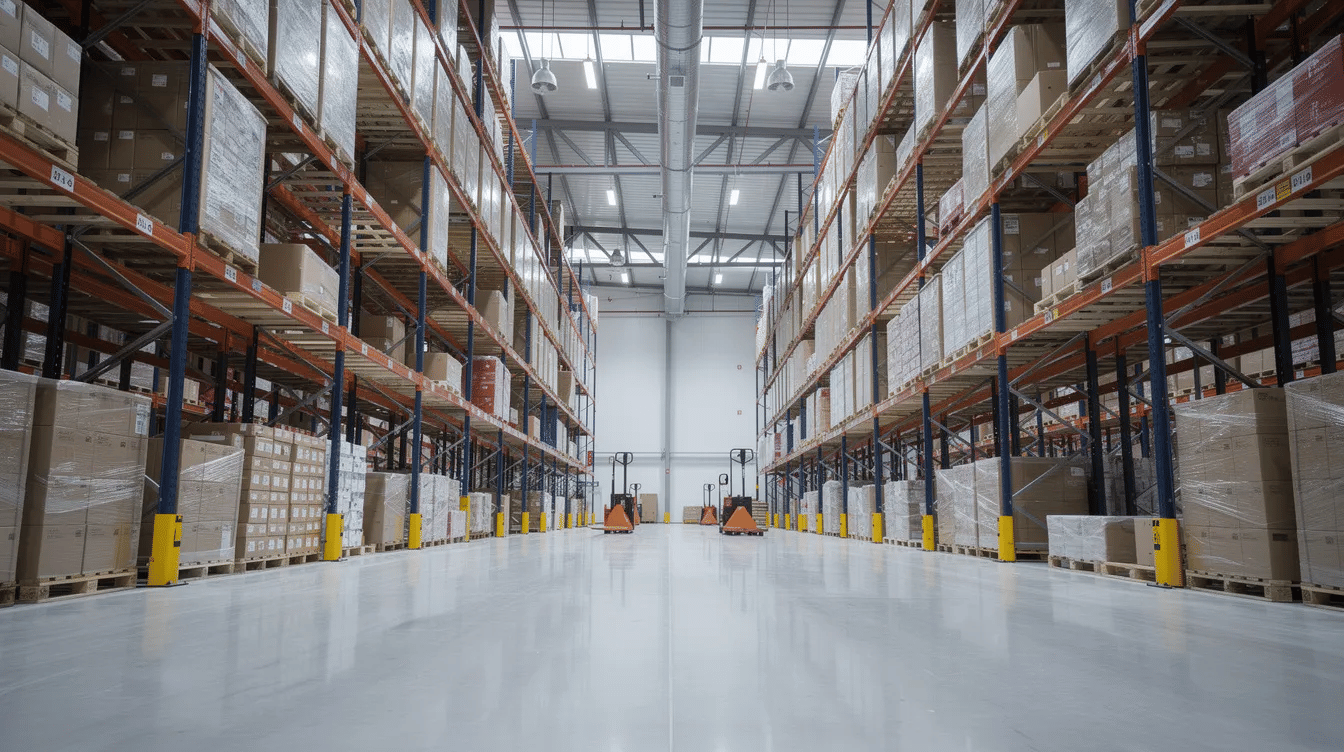
Many modern NJ warehouses feature clear heights of 36 to 40 feet, which leaves substantial room above standard pallet racking for one or more mezzanine levels. Rack-supported mezzanines allow operators to grow storage and picking capacity upward instead of outward, which can be especially valuable in high-throughput fulfillment and e-commerce operations where floor space is constrained but vertical cube is available. They increase usable space in warehouses significantly, and pallet racking can improve operational efficiency in distribution centers when integrated into a well-designed mezzanine layout.
Integrity has an experienced team that understands local permitting and code considerations in New Jersey. From NJ's Uniform Construction Code to municipality-specific plan review processes, Integrity coordinates drawings, engineering, and applications so that projects move forward without surprises. That said, Integrity also executes projects across the country-NJ expertise doesn't mean NJ exclusivity.
Facility managers in New Jersey can speak with Integrity's team at (201) 848-0054 or via the online contact form to discuss their specific building and operations.
Rack-Supported Mezzanine vs. Free Standing Mezzanine
Choosing between a rack-supported mezzanine and a free standing mezzanine depends on what you need the elevated space to do and how it fits into your broader warehouse layout. Here's a practical comparison:
When rack-supported mezzanines are preferable:
- You need tight integration between pallet racking below and picking or storage above-the racking and platform work as a single system.
- High-density storage is the priority, and you want to avoid losing floor space to independent mezzanine columns.
- Carton and case picking is a core function-multi-level pick modules built on rack supports create efficient pick faces across multiple levels.
- Selective pallet racks on the lower levels provide direct access to every pallet position, making replenishment straightforward.
When free standing mezzanines might be a better fit:
- You need unobstructed, column-free space beneath the platform for office space, equipment platforms, or mixed-use work zones.
- The elevated area will support uses not related to racking-packaging lines, supervisor workstations, or break areas.
- Flexibility to reconfigure the space below independently of the mezzanine structure is important.
Integrity regularly designs both rack-supported and free standing mezzanine systems and can help determine the best approach based on product profiles, equipment, workflow, and the specific requirements of the facility. The right solution depends on detailed engineering, code review, and operational analysis rather than a one-size-fits-all rule.
Key Design Considerations: Load Capacity, Flow, and Safety
Properly engineered rack-supported mezzanines must be designed around structural, code, and operational requirements. This section isn't a DIY checklist-it's an overview of the factors that Integrity's team evaluates when developing a system.
Load capacity and structural design:
- Load capacities for mezzanines are engineering-specific to intended weight loads. Live loads (people, product, rolling equipment), dead loads (the structure itself), and concentrated point loads (pallet jacks, conveyors, case erectors) all need to be defined and designed for.
- Beams, columns, and decking are sized by engineers to handle the specific demands of the installation. A platform rated for light carton picking has very different requirements than one supporting pallets or motorized equipment.
Storage flow and accessibility:
- Pallet flow, carton flow, selective racking, and drive in or push back configurations can all be integrated into the lower levels of a rack-supported mezzanine to balance density and direct access.
- Aisle widths and traffic flow must meet safety standards for effective workflow, especially where forklift and pedestrian paths intersect.
Safety and compliance:
- OSHA standards necessitate guardrails and safety access for elevated platforms. Kickplates, non-slip surfaces, and safety gates at pallet drop zones are standard features on well-designed systems.
- Fire safety regulations often require under-mezzanine sprinkler coverage. Decking type matters here-open bar grating allows sprinkler discharge to pass through, while solid decking may require additional sprinkler heads beneath.
- Egress requirements (stair count, placement, width) are driven by building and fire codes and must be coordinated with local officials.
- Seismic calculations, anchoring requirements, and permitting can vary by municipality. Integrity assists with drawings, calculations, and permit application support where required.
Applications: Storage, Picking, and Office Space on Multiple Levels
Rack-supported mezzanines and warehouse mezzanines serve a range of functions within New Jersey warehouses, distribution centers, and manufacturing facilities. Mezzanines can serve as elevated work platforms or storage areas, and the specific application shapes the design.
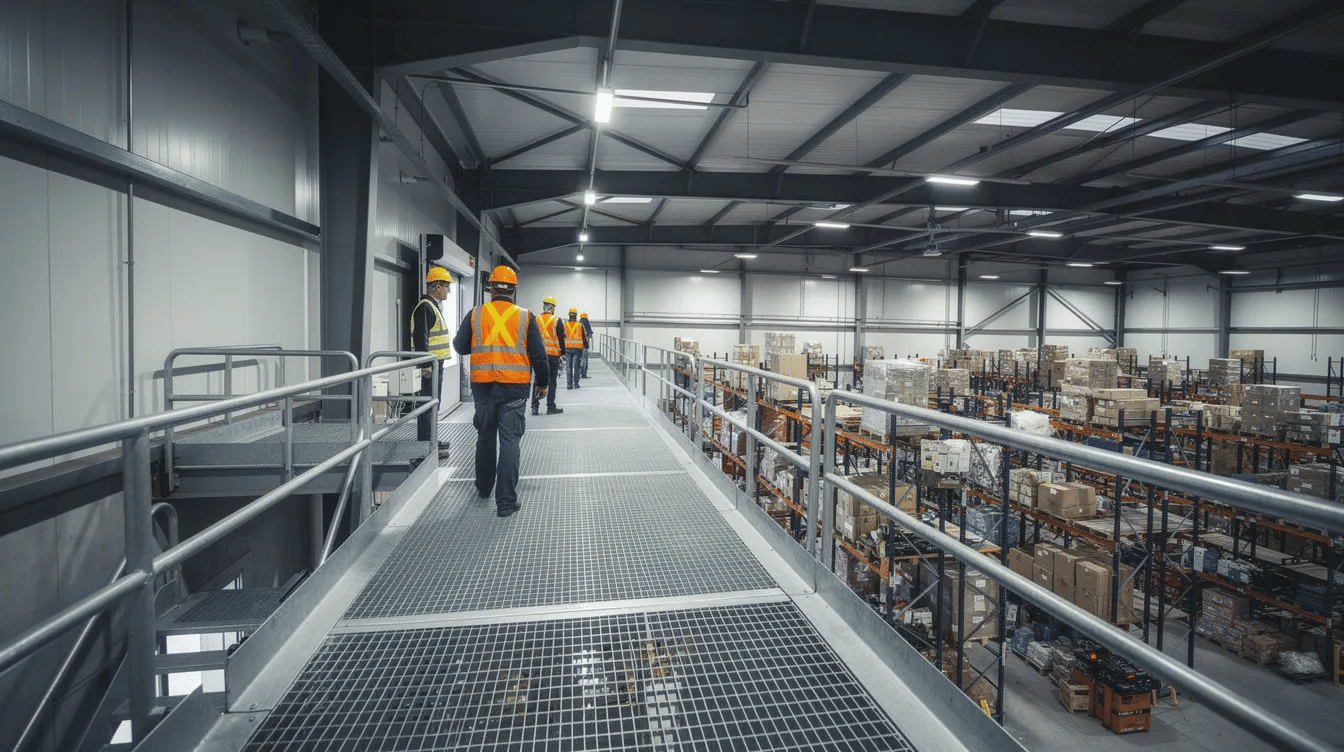
Multi-level pick modules combine pallet racking, carton flow lanes, and elevated walkways to support high-volume piece and case picking. For e-commerce, 3PL, and retail fulfillment operations, this means more SKU faces accessible to pickers without expanding the building footprint. One New Jersey retail distribution center, for example, integrated a two-level pick module atop a mezzanine structure alongside thousands of bays of selective racking within a 1.5 million square foot facility.
Reserve and slow-moving inventory storage on upper levels frees up floor-level racking for fast-moving pallets and replenishment. This lets the production floor and staging areas breathe, reducing congestion where it matters most.
Office space and supervisor platforms can be built on mezzanine levels in some configurations, provided the structure is engineered and permitted for that occupancy. Designing for workflow integration can enhance operational efficiency-putting supervisors closer to the action, for instance, or placing quality control stations adjacent to pick zones.
Integrity's team works with customers to understand inventory profiles, pick paths, pallet dimensions, and equipment (conveyors, lift equipment, carton flow, pallet flow) to design an integrated solution that matches the facility's unique requirements.
Integrating Rack-Supported Mezzanines with Pallet Racking Systems
Rack-supported mezzanines don't exist in isolation-they work best when designed as part of a broader storage system that includes the right rack configurations for the facility's inventory and operations.
Pallet racking systems maximize storage capacity in warehouses, and different rack types serve different purposes within a mezzanine or pick module:
| Rack Type | Best Use Within a Mezzanine System |
|---|---|
| Selective racking | Flexible pallet access; selective pallet racks provide direct access to every pallet, making them ideal for high-SKU environments |
| Drive-in racking | Drive-in racking maximizes storage density for similar products stored in bulk on lower levels |
| Pallet flow | Pallet flow racks use gravity for first-in, first-out inventory management in high-throughput lanes |
| Push back | Push back racks store pallets two to six units deep, balancing density with selectivity |
| Carton flow | Gravity-fed pick faces on mezzanine levels for piece and case picking |
High-density storage systems increase inventory capacity significantly when paired with the right operational strategy. Integrity can supply new pallet racking, quality used racking, or a blended solution depending on budget, schedule, and availability, while still meeting structural and safety requirements. Integrating racking and mezzanines under one turnkey provider simplifies design coordination, installation sequencing, and long-term support.
Planning a pallet racking project alongside a mezzanine system? Call (201) 848-0054 or contact Integrity online to review layout options with an experienced team.
Maximizing Floor Space and Vertical Capacity Without New Construction
Most warehouse operators hit the same wall eventually: the building feels full, aisles are crowded, staging areas shrink, and the team starts talking about moving. Before committing to new construction or a larger lease, it's worth examining what's overhead.
Utilizing vertical space can significantly increase usable floor area. Rack-supported mezzanines reclaim underutilized vertical cube by creating additional levels above existing pallet racking. In buildings with 36 to 40 feet of clear height, there may be room for one or two additional levels of storage or picking without touching the roof.
Better organization of pallet positions, carton flow lanes, and work areas can also help reduce congestion in aisles and staging areas and improve overall material flow when properly planned. The result is more available space for receiving, shipping, and production space without expanding the building envelope.
That said, actual results depend on the specific building, inventory, and design, and should be evaluated case by case. What works in a 200,000 square foot fulfillment center in Edison may look very different from a 50,000 square foot manufacturing facility in South Brunswick.
If your New Jersey or Texas facility feels out of room, reach out to Integrity for a space assessment and conceptual mezzanine layout.
Cost-Effective Expansion: When Rack-Supported Mezzanines Make Financial Sense
Rack-supported mezzanines are cost effective for expanding storage compared to the alternatives. New construction, building additions, or relocating to a larger facility all carry significant capital costs, long lead times, and operational disruption. A mezzanine installed inside an existing building avoids most of those expenses.
Cost benchmarks help frame the comparison. Rack-supported mezzanine systems typically fall in the range of $30 to $55 per square foot installed for standard configurations, while free standing structural mezzanines can run $100 to $200 or more per square foot depending on load requirements and complexity. Neither figure accounts for site-specific variables like foundation work, fire protection modifications, or permitting costs, so every project needs its own budget analysis.
Projects can often be phased to minimize downtime, with installation work scheduled around shipping, receiving, and production as practical. This makes mezzanines a great choice for facilities that can't afford extended shutdowns.
Integrity can help evaluate whether a rack-supported mezzanine, free standing mezzanine, denser pallet racking (such as drive in or pallet flow), or a combination is the most cost effective way to increase storage capacity for your operation.
Discuss budgeting and conceptual options for your specific project-contact Integrity via the online form or call (201) 848-0054.
Integrity's Turnkey Design, Engineering, and Installation Services
Integrity Material Handling Systems Inc. is a turnkey warehouse storage and material handling systems provider with experience in the material handling industry-not simply a rack vendor. The company manages projects from initial concept through installation and ongoing support, serving customers in New Jersey, Texas, and nationwide.
Key services relevant to rack-supported mezzanine and pick module projects include:
- Warehouse layout and professional CAD design
- Structural and seismic coordination with licensed engineers
- Permit application support and documentation preparation
- Custom steel fabrication for non-standard components
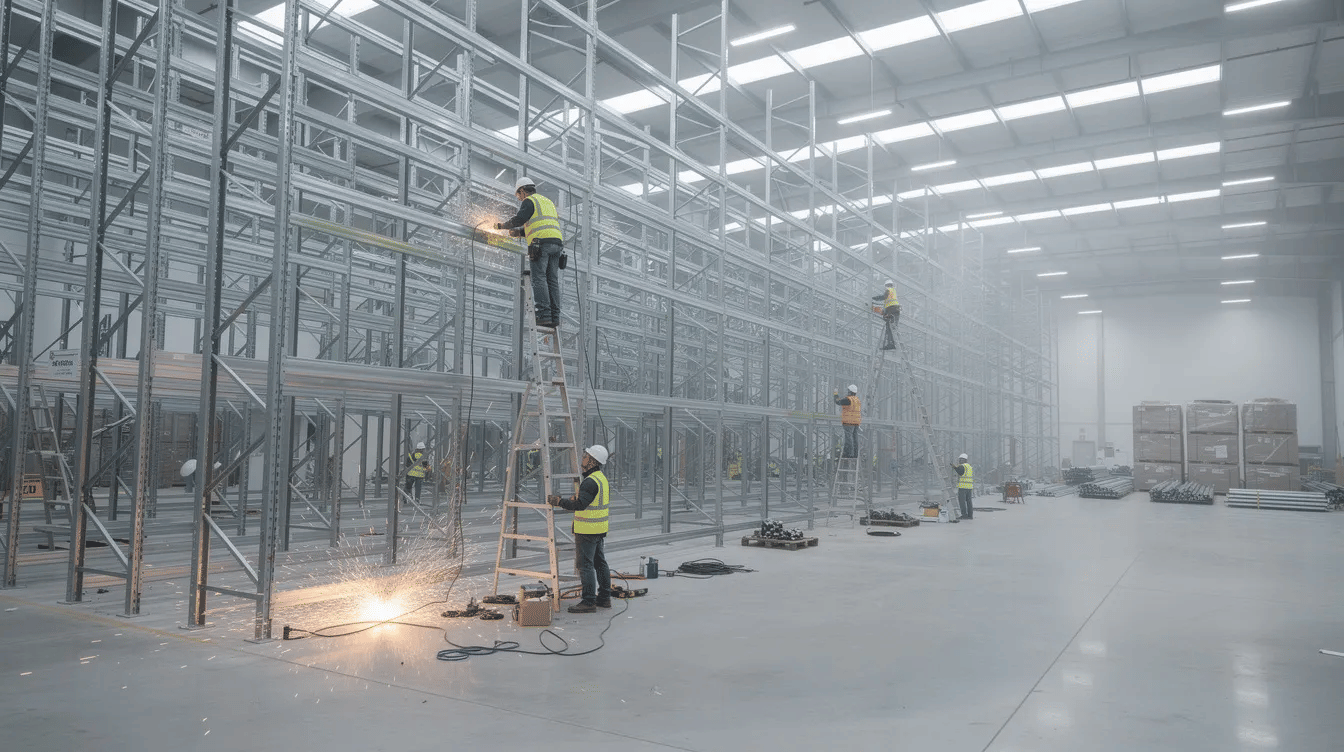
- Professional installation by Integrity's own crews
- Project management across multi-phase builds
Integrity coordinates with building owners, general contractors, architects, and local officials on new construction, tenant fit-outs, and reconfigurations of existing facilities. The company can also manage related scopes-pallet racking, shelving and carton flow systems, safety guardrails, stairs, conveyor supports, and other storage equipment-as part of a single project. Having one accountable partner from planning through installation keeps scheduling tight and accountability clear.
New Jersey and Texas Focus, Nationwide Capabilities
Integrity has a strong presence in New Jersey, with particular depth in Middlesex County and surrounding warehouse and logistics hubs. The company also maintains operations in Texas, where it serves a growing base of customers in major logistics and manufacturing markets.
New Jersey markets where rack-supported mezzanines and pallet racking are in demand:
- Cranbury, South Brunswick, and Woodbridge
- Carteret, Newark, and the Port Newark–Elizabeth corridor
- Edison, Piscataway, and greater Middlesex County
Texas markets Integrity serves:
- Dallas–Fort Worth
- Houston
- San Antonio and Austin
While this article focuses on rack-supported mezzanine systems in New Jersey, readers from any U.S. market are welcome to contact Integrity for consultation and project support. Integrity is not limited to the East Coast-east coast storage equipment expertise travels well when paired with engineering rigor and professional installation.
The fastest way to start a project is to call (201) 848-0054 or submit project details through the online contact page.
Safety, Compliance, and Ongoing Rack System Support
Safety and compliance are not afterthoughts-they're foundational to any rack-supported mezzanine or pallet rack system, especially in high-activity distribution environments.
Compliance with local building codes is essential for mezzanine installations in New Jersey. The state's Uniform Construction Code incorporates ASCE 7 for design loads, including seismic and wind considerations, and New Jersey requires professional engineering and stamped drawings for mezzanine installations. High-piled storage regulations apply when storage heights exceed 12 feet, adding another layer of fire protection and building code coordination.
Integrity provides rack safety assessments, coordinates seismic calculations where required, and assists with the documentation needed for building and fire code review. When pallet racking also serves as the support structure for elevated walkways and platforms, rack damage takes on added urgency. Integrity can help address rack damage, repairs, or replacement to keep systems safe and compliant.
The company also offers training resources, layout guidance for safe aisles and egress paths, and system reconfiguration services to keep installations aligned with changing operations and code requirements. Specific safety solutions, capacity ratings, and compliance pathways depend on each facility's conditions, occupancy, and local regulations, and should be evaluated by qualified professionals.
Relocation, Reconfiguration, and Expansion of Existing Systems
Many New Jersey and Texas facilities already have pallet racking and may be considering how to expand or reconfigure existing systems into a rack-supported mezzanine or pick module. Mezzanines can be reconfigured to adapt to changing business needs, but doing so requires careful planning.
Integrity can disassemble, relocate, and reconfigure pallet racking and mezzanine components, incorporating used and new materials as appropriate while maintaining structural integrity and code compliance. Typical project scenarios include:
- Adding a second level of catwalk and carton flow above existing selective rack
- Extending an existing pick module to accommodate new product lines
- Moving a system from one facility to another during a consolidation or lease transition
- Converting standard pallet racking into a rack-supported mezzanine by upgrading uprights, adding bracing, and installing decking
Updated engineering and permitting review are often required when modifying existing systems. Integrity's project managers coordinate this process to keep the work on track and compliant.
Share your current rack photos, as-built drawings, and future growth plans with Integrity via the contact page to explore reconfiguration options.
How to Get Started on a Rack-Supported Mezzanine Project in New Jersey
Starting a rack-supported mezzanine project doesn't require a finished plan. Here's a practical engagement path:
- Discovery call or inquiry - Share basic information about your facility, operations, and goals. Integrity can work from existing CAD drawings, field measurements, or architect and GC plans for new construction or tenant improvement projects.
- Site visit or plan review - Integrity's team evaluates clear heights, slab conditions, existing racking, and operational flow.
- Conceptual layout - A preliminary warehouse layout showing mezzanine placement, stair locations, rack integration, and material flow.
- Budgeting and specification - Cost estimates, equipment selection (new, used, or blended), and phasing options.
- Engineering and permitting - Stamped drawings, seismic calculations, and permit applications coordinated with local authorities having jurisdiction.
- Professional installation - Phased to minimize disruption, with safety protocols and inspections throughout.
Before reaching out, it helps to gather basic details: building clear heights, current pallet dimensions and carton sizes, approximate SKU counts, and throughput targets. But Integrity can help fill in the gaps-that's part of the process.
Early involvement, before committing to a specific building layout or equipment list, often leads to better storage density, more efficient material flow, and smoother permitting. Bringing Integrity into the conversation during the lease negotiation or construction planning phase gives the team room to optimize the solution rather than work around constraints.
Call (201) 848-0054 or start your project online to begin planning a rack-supported mezzanine or pick module.
Why Choose Integrity for Rack-Supported Mezzanine Systems
Integrity Material Handling Systems Inc. brings together the capabilities that rack-supported mezzanine and pick module projects demand: turnkey project management, deep experience with pallet racking and mezzanine systems, local knowledge in NJ and Texas, and the ability to serve customers nationwide on complex, multi-phase warehouse projects.
Beyond mezzanines, Integrity provides a full range of storage solutions-selective racking, drive in and push back systems, pallet flow, shelving, carton flow, archive storage, custom mezzanines, specialty configurations, and custom steel fabrication. That breadth means the company can design a storage system around a facility's operations rather than forcing operations to fit a catalog product.
Integrity provides end-to-end support-from initial concept, layout, and engineering through installation, inspections support, and long-term modifications or expansions. When the business grows, the storage system can grow with it. When product lines shift, the layout can adapt. Working with a single, accountable company simplifies scheduling, coordination, and troubleshooting throughout the life of the system.
Take the next step: call (201) 848-0054 or request a custom quote for your rack-supported mezzanine project.
FAQs: Rack-Supported Mezzanine Systems in New Jersey
Do I have enough ceiling height for a rack-supported mezzanine?
Most successful mezzanine projects require sufficient clear height to provide safe headroom on each level plus space for sprinklers, lighting, and structural depth of the platform itself. In New Jersey, mezzanines must maintain a minimum clearance of 7 feet above and below the platform. Facilities with typical warehouse clear heights of 24 to 40 feet often have room for at least one additional level, though every building must be evaluated individually. Integrity can review building drawings or perform a site visit to determine whether a rack-supported mezzanine is feasible and how many levels may be practical for your available space.
Can my existing pallet racking be used to support a mezzanine or pick module?
In some cases, existing pallet racking can be incorporated into a rack-supported mezzanine design, but only if it is structurally appropriate, in good condition, and engineered for the new loads and configuration. Uprights, beams, bracing, and connections may need to be upgraded or replaced-ad hoc field modifications are not acceptable for a mezzanine support structure. Integrity can inspect existing racking, review manufacturer data, and coordinate engineering to determine whether reuse is possible or if new components are recommended. The goal is to store inventory efficiently while keeping the structure safe and code-compliant.
How long does it typically take to install a rack-supported mezzanine system?
Timelines vary based on system size, complexity, permitting, material lead times, and the need to work around ongoing operations and shift schedules. Small, straightforward systems may be completed relatively quickly once materials and permits are in place, while large multi-level pick modules may require phased installation over a longer period. Contact Integrity early in your planning process so that design, engineering, and permitting can proceed in parallel with other project activities where possible, keeping the overall schedule as efficient as the system itself.
Will a rack-supported mezzanine require permits or inspections in New Jersey?
Many New Jersey municipalities treat mezzanines and substantial pallet rack installations as structural or building modifications that require permits, stamped drawings, and inspections. Requirements can include structural calculations, seismic or wind considerations, fire protection coordination, and egress planning-all of which must be addressed on a project-specific basis. Integrity regularly assists customers with the documentation, engineering coordination, and layout information needed for permit applications, while final approval rests with local authorities. Making safety and compliance a top priority from the start helps avoid costly delays down the line.
Can a rack-supported mezzanine be modified or expanded as my business grows?
Many rack-supported mezzanine and pick module systems are designed with future scalability in mind, allowing for additional bays, levels, or reconfiguration of flow lanes as operations evolve. Future scalability is important for designing mezzanine systems to adapt to operational changes-whether that means new product lines, higher throughput, or a shift in fulfillment strategy. Any modifications should be engineered and permitted as required, particularly where structural changes, load capacity increases, or changes in use are involved. Integrity offers ongoing support for expansions, reconfigurations, and relocations, helping facilities optimize their systems over time.