Texas is the second-largest warehouse market in the country, and every square foot of that space has to earn its keep. Whether you operate a distribution center along the I-35 corridor, a cold storage facility near the Gulf Coast, or a fulfillment operation in Dallas-Fort Worth, the pallet racking system inside your building is what turns raw square footage into productive storage capacity. Integrity Material Handling Systems Inc. designs, sources, installs, and maintains pallet racking systems across Texas, bringing turnkey project management to facilities that need more than just rack components dropped off on a flatbed.
Key Takeaways
- Integrity Material Handling Systems Inc. designs, supplies, and installs engineered pallet racking systems across Texas from operations in New Jersey and Texas, serving warehouses, 3PLs, manufacturers, and fulfillment centers statewide.
- Integrity is a turnkey provider handling pallet racking, rack-supported mezzanines and pick modules, warehouse layout and CAD design, permitting coordination, seismic calculations where required, professional installation, relocation, safety assessments, and ongoing support.
- Integrity helps Texas facilities in Houston, Dallas-Fort Worth, San Antonio, Austin, and key I-10, I-35, and I-45 logistics corridors evaluate storage needs, choose the right pallet racking system, and optimize vertical space without overcommitting to specific results.
- Pallet racking can optimize warehouse space by utilizing vertical storage, and the right system depends on your inventory profile, building conditions, material handling equipment, and operational goals.
- To discuss a pallet racking or rack-supported mezzanine project for your Texas warehouse, call (201) 848-0054 or contact Integrity online for a custom proposal.
Why Texas Warehouses Turn to Integrity for Pallet Racking Systems
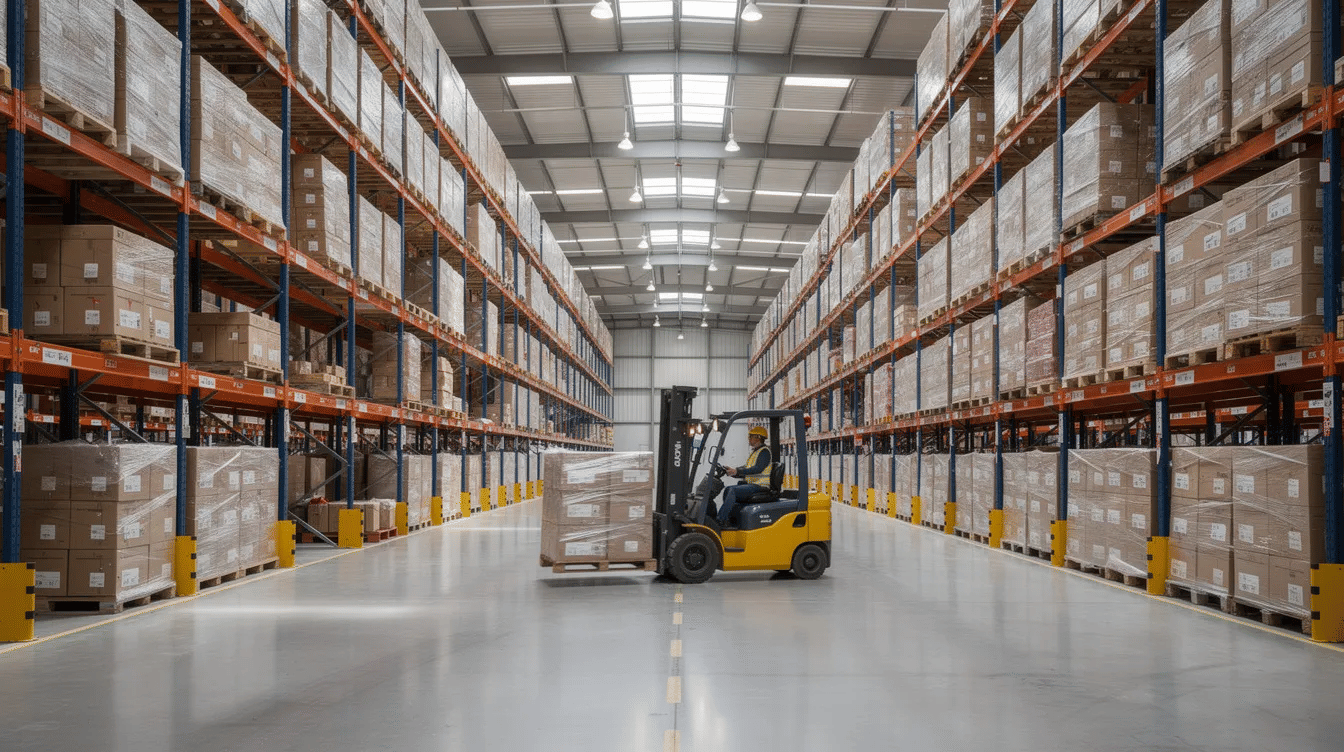
Rapid growth in Houston, Dallas-Fort Worth, San Antonio, Austin, El Paso, and the Rio Grande Valley is straining existing warehouse capacity across the state. The U.S. pallet racking market was valued at approximately $2.62 billion in 2024 and is projected to reach about $5.77 billion by 2033, and Texas is absorbing a significant share of that demand. Various Texas suppliers provide a range of pallet racking types and services, but not all of them offer the consultative, end-to-end approach that complex projects require.
Integrity serves Texas warehouses, distribution centers, manufacturers, cold storage operations, and e-commerce fulfillment facilities that need engineered racking systems rather than a catalog order. The focus is on complete solutions: pallet racking, rack-supported mezzanines and pick modules, industrial shelving, carton flow, archive storage, and custom steel fabrication integrated into one cohesive warehouse layout.
While Integrity supports projects nationwide, the company has dedicated resources and experience in Texas and New Jersey, including familiarity with local permitting, fire code, and building code considerations that can shape pallet rack design and installation requirements across major metros and smaller communities.
If you manage a Texas facility and need help evaluating your pallet racking options, call (201) 848-0054 or request a custom quote online to discuss your specific requirements with Integrity's team in person or schedule a visit.
Turnkey Pallet Racking System Services for Texas Facilities
Integrity manages the full lifecycle of a pallet racking project in Texas, so facilities are covered from initial concept through installation and post-install support. Rather than handing off a parts list and walking away, the team coordinates every phase so facility managers and operations leaders can stay focused on their business.
Core services include:
- Needs assessment and inventory profiling
- Warehouse layout and CAD design
- Selection of pallet racking configurations and material handling equipment
- Permitting coordination and seismic calculations where required
- Professional installation, anchoring, and load labeling
- Rack safety assessments and inspections
- Disassembly, relocation, and reconfiguration of existing rack systems
This turnkey model works whether the project involves new pallet racks, quality used pallet racking systems, or a blended approach, and Integrity can customize the solution to fit the project. For Texas warehouse teams that want a single accountable partner rather than juggling multiple vendors, call (201) 848-0054 or message Integrity's team online.
Evaluating Your Texas Warehouse: From Inventory Profile to Pallet Rack Design
Integrity begins Texas projects with a structured evaluation of current and projected operations rather than jumping straight to a specific racking system. Pallet racking systems can be customized for specific warehouse layouts, but only after the operational picture is clear.
Key data points in this evaluation include:
- SKU mix: fast movers vs. slow movers, seasonal peaks
- Pallet dimensions and weights: standard 48×40, oversized, or mixed
- Turnover patterns: daily, weekly, and seasonal throughput volumes
- Picking methods: full-pallet, case-level, or each-pick operations
- Equipment: counterbalance forklifts, reach trucks, VNA turret trucks, order pickers
- Special requirements: cold storage, food-grade environments, hazardous materials
Selecting racking involves considering space, inventory characteristics, and equipment compatibility. Integrity also reviews building dimensions, clear height, column grid spacing, slab conditions, sprinkler locations, dock configuration, and egress paths. Many modern spec warehouses in DFW feature 50-by-52- or 52-by-56-foot column grids, and Texas locations along major freight corridors often need flexible, scalable rack designs that can adapt to seasonal volume swings or new customer contracts.
A mixed approach to pallet racking can optimize storage for fast-moving and bulk-reserve inventory. The right configuration may combine multiple rack types and storage systems within a single Texas warehouse, and Integrity helps determine which combination is the best fit for the warehouse.
Core Pallet Racking Types for Texas Warehouses
Integrity provides a broad range of pallet racking options to Texas customers and frequently combines several within a single facility. Pallet racking types include selective, drive-in, push-back, pallet flow, and shuttle systems, and each serves a different operational purpose.
The core trade-off is straightforward: inventory selectivity vs. storage density affects the choice of pallet racking systems. A system that gives you direct access to every pallet takes more floor space; a system that packs pallets tightly limits how quickly you can retrieve a specific SKU.
Pallet rack systems have supplied racking to the warehouse industry for over 50 years, and the technology has matured into well-defined categories. Pallet racks can hold between 2,000 and 6,000 pounds per pair of beams, though exact capacity depends on beam length, gauge, upright frame configuration, and connection type.
Integrity can integrate these pallet racking systems with industrial shelving, carton flow, and conveyor systems to support picking, fulfillment, and delivery requirements across Texas operations. If you are unsure which racking system is right for your facility, contact Integrity online for a comparative analysis and concept layouts.
Selective Pallet Racking Systems: Versatility for Texas Operations
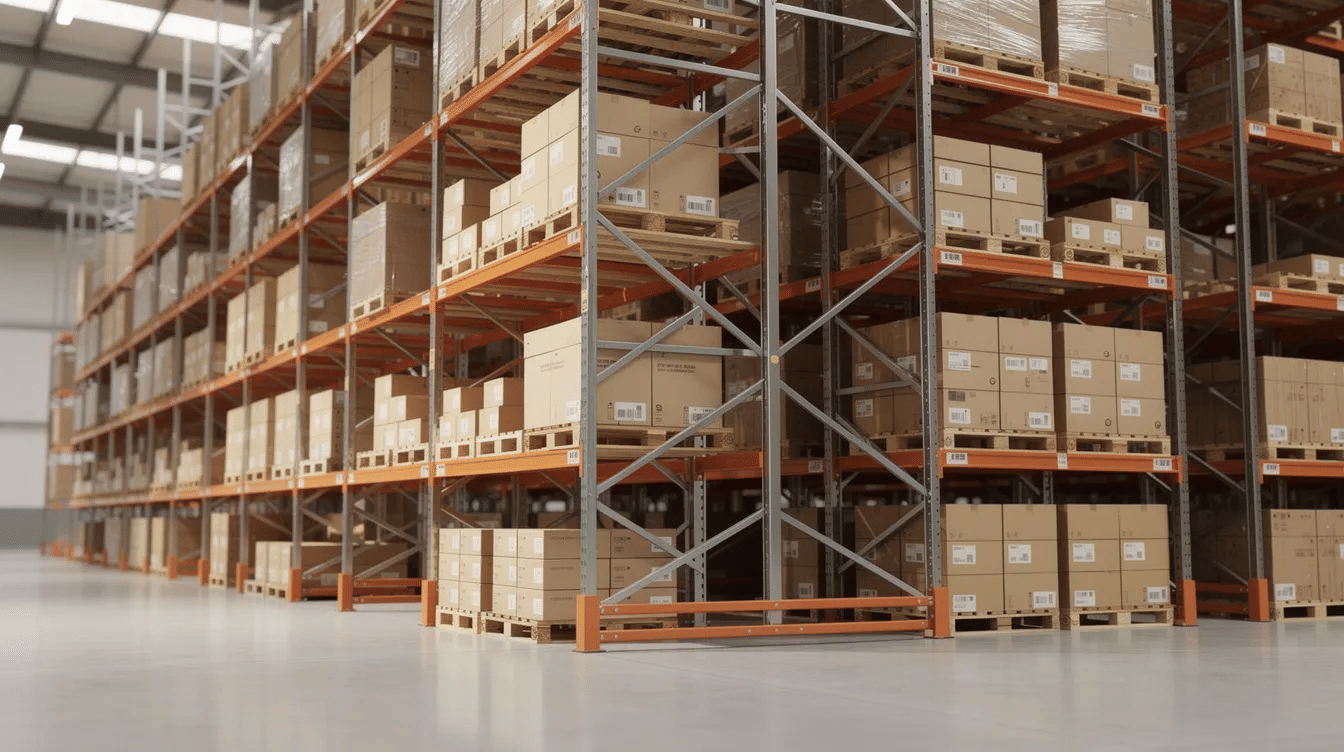
Selective pallet racking is the most common type used in warehouses, and it is the system Integrity designs and installs most frequently in Texas. The reason is simple: direct access to every pallet position, easy reconfigurability, and compatibility with virtually any forklift type.
Typical applications include multi-SKU distribution centers along the Dallas-Fort Worth logistics hub, regional fulfillment centers near Austin, and mixed-use facilities that require frequent pallet-level picking. A typical pallet rack ranges from 8 to 20 feet high, though many Texas facilities push selective rack well beyond that range where clear height allows and reach truck or order picker access is available.
Integrity optimizes selective rack by pairing bay widths and beam lengths to suit pallet sizes, setting vertical beam spacing to respect load capacities and sprinkler clearances, and aligning aisle widths with the facility's forklift or reach truck fleet. Selective pallet racks are highly reconfigurable as Texas operations grow or shift customer profiles, provided changes are evaluated for structural capacity and code implications.
If your Texas facility is considering selective pallet racking, call (201) 848-0054 to review your current layout and discuss upgrade or expansion options with Integrity.
High-Density Pallet Racking Systems: Drive-In, Push Back & Pallet Flow
Many Texas warehouses face square footage constraints or rising lease costs, making high density storage systems attractive when operationally appropriate. High-density systems increase storage capabilities significantly but limit access to individual pallets, so the match between system and operation matters.
Drive-in and drive-through racking allows high-density storage of similar items by eliminating aisles between rack rows. Forklifts drive directly into the rack structure to store and retrieve pallets. This system is common in cold storage operations along the Gulf Coast and bulk manufacturing facilities in North Texas where large volumes of the same SKU dominate inventory.
Push back racking uses nested carts on inclined rails for high-density storage. It operates as a LIFO system suited to high-throughput, limited-SKU zones where Texas operators want to reduce aisle counts but maintain relatively good selectivity compared to drive-in configurations.
Pallet flow racking utilizes inclined rollers for FIFO inventory management. Pallet flow racking uses gravity for product movement, making it ideal for food, beverage, pharmaceutical, and other time-sensitive inventory in Texas. FIFO is necessary for perishable goods while LIFO benefits non-perishable inventory, and this distinction should drive system selection.
Integrity evaluates product rotation, accessibility, and forklift traffic patterns before recommending any high-density pallet racking system. Design and maintenance requirements can be more complex and project-specific, particularly for flow systems.
Cantilever Racking and Industrial Shelving for Texas Material Handling Needs
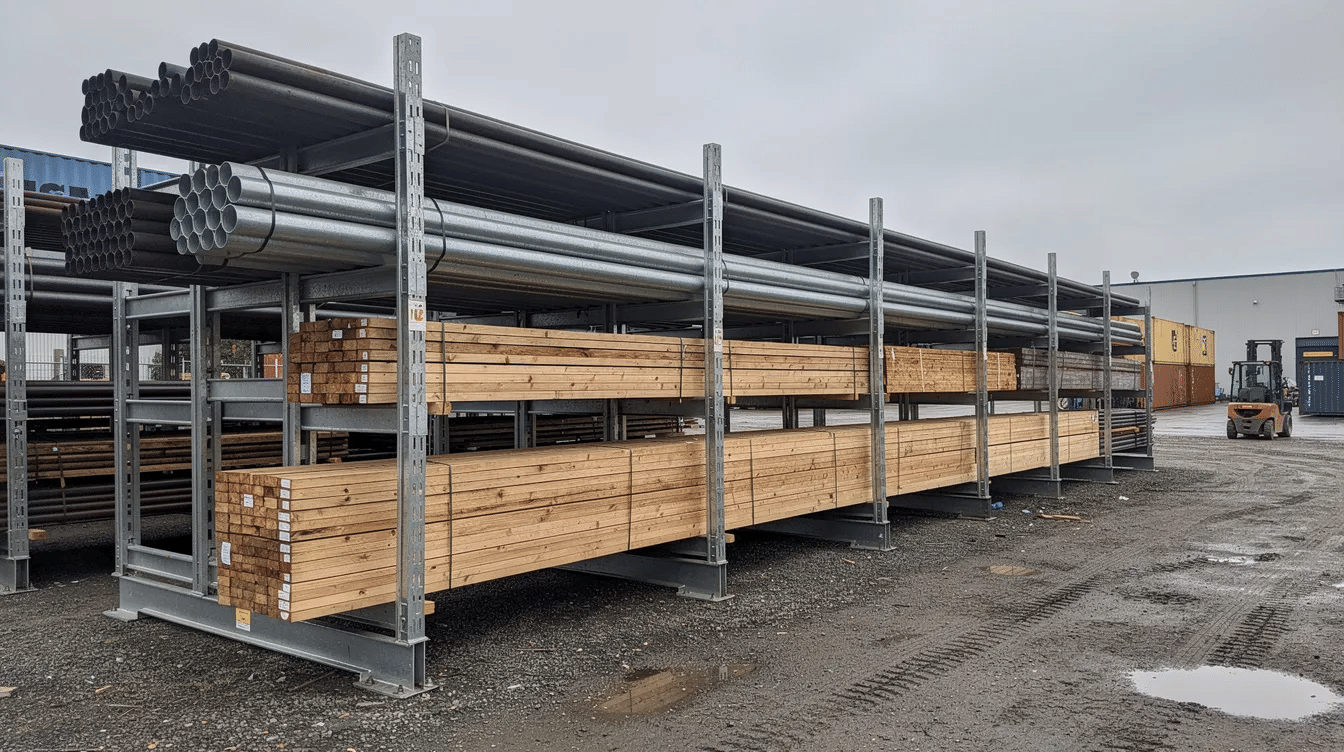
Not all Texas inventory fits neatly on standard pallets. Cantilever racking is designed for awkwardly shaped items and serves as the go-to system for long, bulky materials such as steel tubing, lumber, pipe, carpet, and sheet products commonly stored by Texas manufacturers, fabrication shops, and building materials suppliers.
Industrial shelving, carton flow, and small-parts shelving solutions often sit under or adjacent to pallet racking in Texas warehouses, supporting e-commerce picking, spare parts operations, and lighter SKUs. These systems can improve picking productivity and create organized, accessible storage space for items that would otherwise be lost on a full pallet.
Integrity can design mixed environments that combine pallet racking, cantilever racking, and shelving in a coherent warehouse layout, including appropriate aisle widths and safety clearances. If your Texas business handles unconventional or oversize products, request a custom storage system consultation with Integrity rather than forcing everything into traditional pallet racks.
Rack-Supported Mezzanines & Pick Modules: Going Vertical in Texas
Multi-tier or mezzanine racking increases vertical storage capacity within the same footprint, making it one of the most effective ways for Texas facilities to add usable levels inside an existing building without pursuing costly expansions or new construction.
Integrity uses pallet racking uprights and shelving as the structural support for elevated walkways, pick faces, and work areas. These rack-supported mezzanines integrate stairs, guardrails, pallet drop zones, and safety features designed to meet applicable code requirements.
Common Texas use cases include:
- E-commerce fulfillment centers near Dallas and Austin requiring multi-level picking
- 3PL providers in Houston needing more cubic storage without adding square footage
- Regional distribution hubs consolidating inventory for same-day or next-day delivery
A case study from Grand Prairie, Texas illustrates the potential: a 100,000-square-foot tenant space allocated roughly 33,000 square feet to selective rack and 9,000 square feet to a robotics zone, delivering 1,100 pallet positions plus over 123,000 carton positions with rack frames reaching 28 feet within a 32-foot clear height building.
Rack-supported mezzanines and pick modules require careful engineering, load calculations, and coordination with local building, fire, and sometimes seismic requirements, which Integrity helps navigate in Texas and nationwide. To explore whether a rack-supported mezzanine or pick module is feasible for your Texas facility, call (201) 848-0054 or speak with Integrity's engineering and design team online.
New vs. Used Pallet Racking Systems for Texas Facilities
Integrity offers both new pallet racking and quality used pallet racks, as well as hybrid systems, for cost-conscious warehouses in TX seeking the right balance of cost, lead time, and configuration flexibility.
New pallet racking systems support efficient storage solutions with tailored specifications, consistent components, manufacturer warranty support, and straightforward engineering documentation for permitting and capacity labeling. When pricing and lead times for new steel fluctuate due to tariffs or supply chain disruptions, planning ahead becomes especially important.
Used pallet racks are adaptable for various business types and can offer potential cost savings, shorter lead times for certain sizes, and suitability for temporary or transitional facilities when evaluated for condition and compatibility. Integrity's team is knowledgeable in identifying component styles and compatibility, such as different teardrop designs and connector types from various brands, which is critical when expanding or reconfiguring existing pallet racks with used components.
Key factors to weigh when considering new vs. used racking:
| Factor | New Racking | Used Racking |
|---|---|---|
| Specifications | Custom to project | Limited to available stock |
| Lead time | Varies with manufacturer | Often shorter |
| Pricing | Market-driven, tariff-sensitive | Typically lower per position |
| Documentation | Full capacity data included | May require verification |
| Compatibility | Uniform | Must match existing system style |
Final decisions should consider condition, code and permitting requirements, future expansion plans, and long-term operational goals, and Integrity can help clients assess those trade-offs in a consultative manner.
Warehouse Layout, CAD Design & Permitting Support in Texas
Well-designed warehouse layouts are essential to get full value from pallet racking systems, especially in high-cost Texas markets around major ports, intermodal hubs, and airport corridors. Integrity uses CAD-based warehouse layout and design to map pallet racking, cantilever racking, industrial shelving, pick paths, staging areas, and conveyor or sortation zones where applicable.
Integrity collaborates with building owners, general contractors, architects, and fire protection engineers to ensure pallet racking layouts consider egress, fire code requirements, flue space, and sprinkler coverage. Texas uses International Building Code standards, which classify buildings into Seismic Design Categories, and storage rack systems assigned to SDC C or higher may require special inspections and anchorage. Texas warehouses may face local seismic and building code compliance requirements depending on location and rack height.
For Texas projects requiring engineering documentation or seismic calculations, Integrity coordinates with licensed professionals to provide stamped drawings and loading data as required by the jurisdiction. Reputable Texas manufacturers and installers need to comply with RMI standards for pallet racking, and this planning and permitting support helps warehouse teams minimize surprises late in the project.
Professional Installation, Reconfiguration & Relocation of Pallet Racks
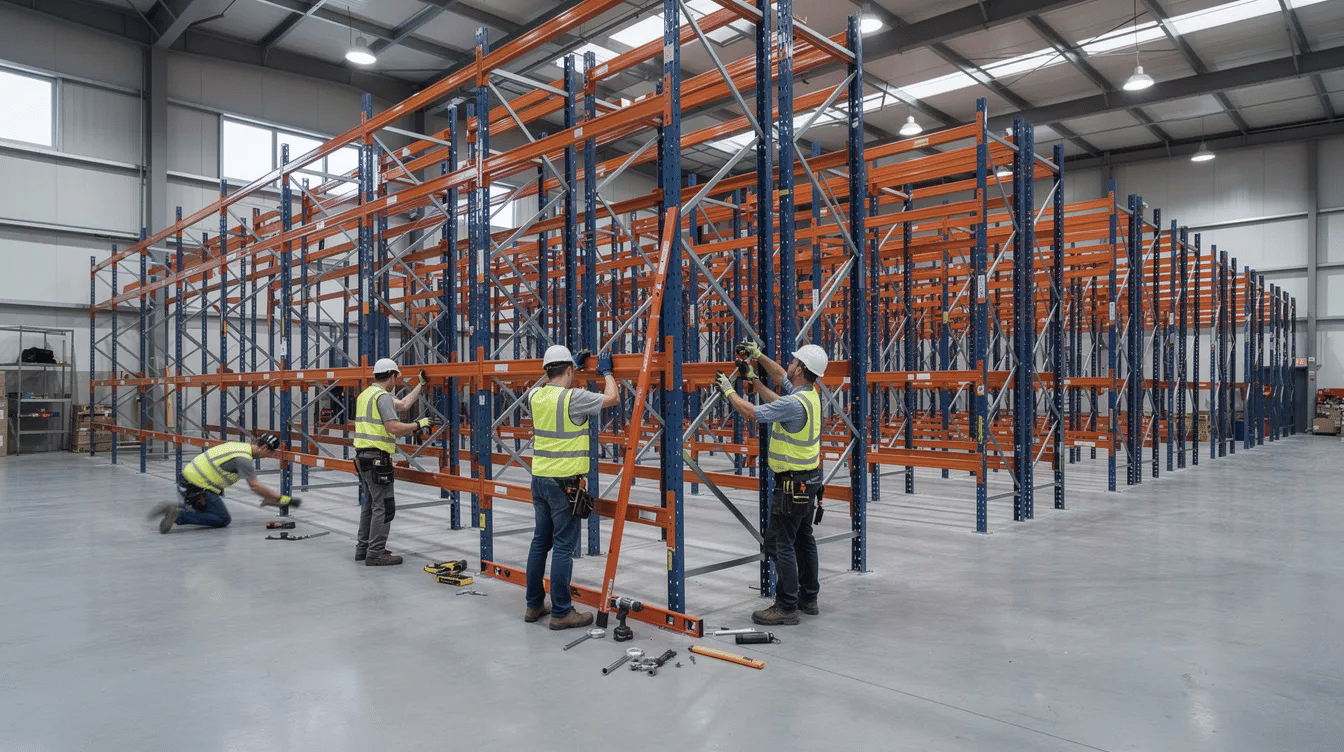
Pallet racking is a load-bearing engineered structure, and improper installation or modification can affect capacity, stability, and safety. Proper anchoring and installation are necessary for safety and compliance in rack systems, and pallet racks must be bolted to the floor for safety regardless of height or configuration.
Integrity's professional installation services in Texas include:
- Base plate anchoring per engineering specifications
- Upright and beam assembly with torque verification
- Bracing and cross-aisle tie installation
- Accessory mounting (wire decking, rack guards, column protectors)
- Final inspection for conformance with design documents and load plaques
Installation of pallet racks typically takes one day to a week depending on project scope, rack type, and site conditions. Larger projects, such as SanMar's Dallas facility expansion to 700,000 square feet with racking reaching 38 feet, involve phased rollouts over longer timelines.
Integrity also handles disassembly, relocation, and reconfiguration of existing pallet racking systems. Before reusing racks, Integrity evaluates upright and beam damage, capacity labeling, compatibility among brands, slab conditions, changes in beam elevations, and impacts on height-to-depth ratios and flue spaces.
Texas operators planning a move, expansion, or major re-rack can schedule a project review with Integrity online so modifications can be planned safely and efficiently.
Rack Safety, Inspections & Ongoing Maintenance in Texas Warehouses
Ongoing rack safety is critical in high-activity Texas facilities where forklift traffic, high-turn inventory, and 24/7 shifts increase the risk of impact damage. Pallet racking systems should be inspected every 6 to 12 months, with more frequent checks in especially high-traffic areas. Regular maintenance ensures safety and stability in high-traffic areas and helps prevent small issues from becoming structural failures.
Integrity's rack safety assessment services include:
- Visual inspections for damage to uprights, beams, and connectors
- Review of base plate anchoring and floor anchor condition
- Evaluation of load labeling accuracy and visibility
- Identification of areas where reconfiguration has altered original design assumptions
- Documentation of findings and recommended corrective actions
Compliance with OSHA and local building codes is crucial for pallet racking installations, and damaged components should be addressed promptly. Integrity can help Texas warehouses develop inspection routines, train teams to recognize common rack damage, and plan phased repair or replacement projects to minimize disruption.
While Integrity supports safety and compliance efforts, specific outcomes depend on the facility, conditions, and applicable codes and standards enforced by local authorities and regulators.
Integrating Material Handling Equipment with Pallet Racking Systems
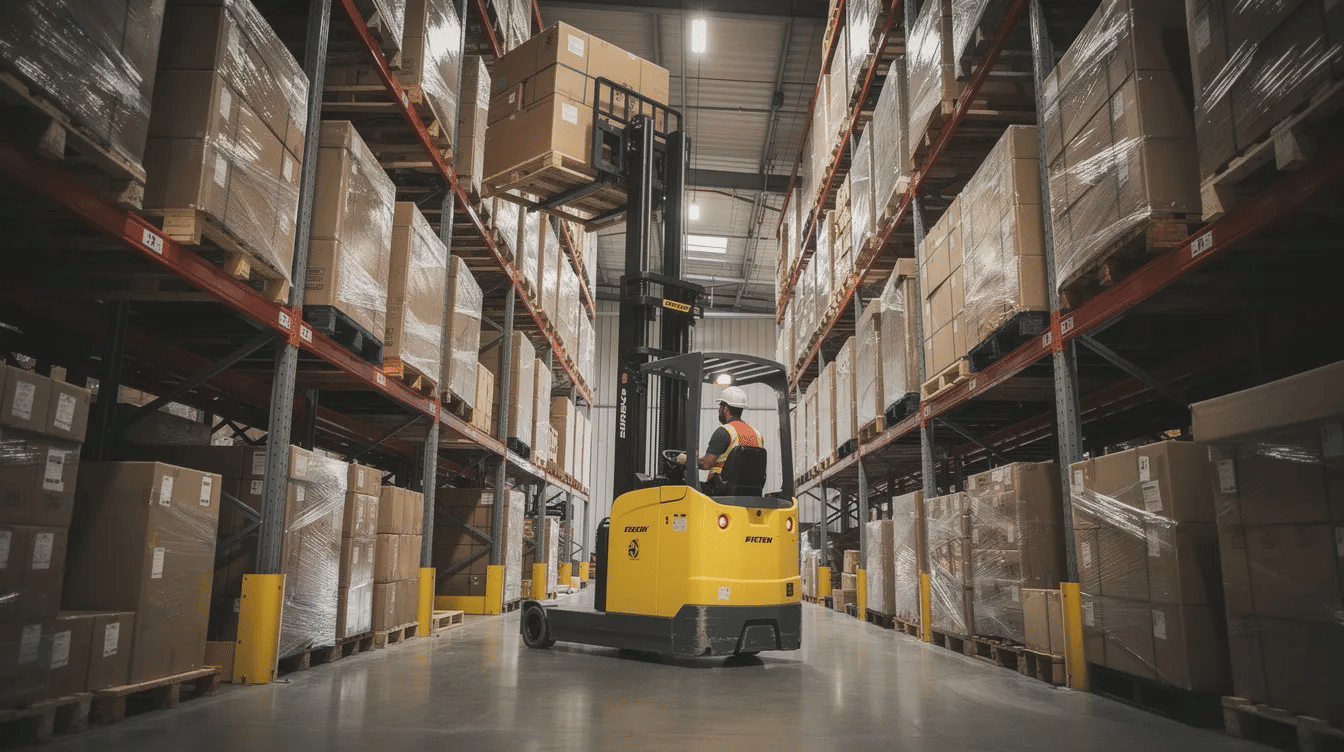
Pallet racking systems in Texas rarely operate in isolation. Rack configuration must accommodate material handling equipment for safe operation, and load specifications must be evaluated to ensure pallet racking safety and capacity work in concert with the equipment accessing them.
Integrity considers lift equipment dimensions and capabilities when setting rack heights, aisle widths, and beam elevations. Pallet racking typically holds between 2,000 and 6,000 pounds per pair of beams, and the equipment retrieving those loads must be able to reach, lift, and maneuver safely within the aisle environment.
Key equipment-to-rack considerations:
| Equipment Type | Typical Aisle Width | Best Paired With |
|---|---|---|
| Counterbalance forklift | 12+ feet | Selective rack, moderate heights |
| Reach truck | 8–10 feet | Selective or double-deep, heights to 30+ feet |
| VNA turret truck | 5–7 feet | Very narrow aisle rack, maximum density |
| Order picker | 8–10 feet | Multi-level pick modules, case picking |
Narrow Aisle (VNA) racking maximizes vertical and floor space with tight aisles but demands stricter floor tolerances and specialized operator training. For Texas operations implementing carton flow, gravity conveyors, or powered conveyor systems, Integrity can plan rack openings, transfer points, and guardrails to support safe, efficient product movement.
If you are planning to modernize your warehouse rather than just replace pallet racking, call (201) 848-0054 to discuss an integrated material handling concept for your Texas facility.
How Integrity Supports Texas Projects from Concept Through Completion
Integrity's project approach for Texas customers follows a clear sequence: discovery, concept design, budgeting, detailed engineering, equipment sourcing (new and used), installation, and post-implementation support. The company's project management services coordinate schedules, installers, equipment deliveries, and inspections so Texas facility teams can stay focused on ongoing operations.
Integrity can phase pallet racking installations and reconfigurations around live operations to reduce downtime, leveraging off-hours work where project constraints allow. The team has experience with a range of industries common in Texas, including logistics, retail distribution, food and beverage, energy-related supply chains, and records or archive storage facilities.
Whether your Texas operation needs a reliable partner for a 500-position selective rack install or a multi-level pick module supporting thousands of carton positions, Integrity delivers a fantastic project experience while coordinating every detail from initial inquiry through final walk-through. Request a tailored proposal outlining recommended pallet racking systems, mezzanine or pick module options, and implementation plans specific to your Texas facility.
FAQs: Pallet Racking Systems in Texas
How do I know which pallet racking system is right for my Texas warehouse?
The best pallet racking system depends on your SKU mix, inventory turnover, required selectivity, available clear height, equipment fleet, and budget. Many Texas facilities benefit from a combination of selective, high-density, and shelving systems rather than a single rack type. Integrity typically starts with an on-site or virtual assessment, then develops CAD layouts and options so your team can compare trade-offs before committing to a design.
Can Integrity work with my existing pallet racks, or do I need all new equipment?
Integrity can often integrate existing pallet racks into a new layout, supplement systems with compatible new or used components, or help determine when replacement is more practical due to condition, compatibility, or code considerations. A site review of your current racks, including condition and manufacturer details, is usually necessary before confirming a reuse strategy.
What should I consider before buying used pallet racking in Texas?
Consider structural condition, brand and style compatibility, available capacity data, potential repairs, and whether used racks will meet current code and permitting requirements for your Texas jurisdiction. Integrity can help evaluate used pallet rack options, including those already on site or available from third parties, to avoid hidden costs or safety issues.
How long does a pallet racking installation typically take?
Installation timelines vary significantly based on project size, rack type, permitting requirements, and whether the Texas facility is operating during the changeover. Installation of pallet racks typically takes one day to a week for standard projects, though larger or more complex installations are scheduled over longer periods. Integrity provides project-specific schedules during the planning phase and can often phase work to minimize disruption to live operations.
Does Integrity only serve Texas and New Jersey, or can you support multi-state networks?
While Texas and New Jersey are strategic focus markets, Integrity designs and manages pallet racking and mezzanine projects nationwide, including multi-facility rollouts for companies with distribution networks across several states. If your organization has a multi-location footprint, contact Integrity to discuss coordinated pallet racking and material handling standards across your portfolio.