New Jersey's warehouse and distribution markets are among the most competitive in the country, and the right pallet racking system can make the difference between an operation that runs efficiently and one that's constantly fighting for space. This guide covers everything NJ facility managers need to know about pallet rack design, equipment selection, installation, and the engineering considerations that affect every project, with a focus on how Integrity Material Handling Systems Inc. supports warehouse operations from concept through completion.
Key Takeaways
- Integrity designs, engineers, supplies, and installs pallet racking systems in New Jersey, with particular depth of experience in Middlesex County, Cranbury/Exit 8A, Edison, and surrounding distribution markets.
- The primary pallet racking systems available in New Jersey include selective, drive-in, push-back, pallet flow, and cantilever racks. Pallet racking system types include selective, push-back, drive-in, pallet flow, and cantilever variants, and Integrity helps match each to the operation's inventory, throughput, and material handling equipment.
- Integrity handles the full project lifecycle: warehouse layout and CAD design, permitting and seismic calculations where required, new and used rack sourcing, professional installation, and ongoing reconfiguration or relocation support, including rack-supported mezzanine and pick module systems.
- Every system must be engineered around local codes, building conditions, and operational requirements. Integrity provides project-specific guidance rather than one-size-fits-all solutions.
- Call (201) 848-0054 or contact Integrity online to discuss your New Jersey pallet racking or warehouse expansion project.
Why New Jersey Warehouses Turn to Integrity for Pallet Racking Systems
New Jersey's logistics corridor stretches from the Newark/Elizabeth port complex through the Meadowlands, down the Turnpike to the Exit 8A/Cranbury submarket, and across Middlesex County hubs like Edison, South Brunswick, Piscataway, and Carteret. In Q1 2026, the state recorded 6.9 million square feet of positive net absorption across its 452-million-square-foot industrial inventory, with Central NJ rents climbing roughly 11% year over year. That kind of pressure means warehouse operators need to maximize pallet positions and throughput without moving to a bigger building.
Integrity Material Handling Systems Inc. is a turnkey warehouse storage and material handling systems provider with operations in New Jersey and Texas, serving customers nationwide. Rather than simply selling pallet racks, Integrity works as a dedicated partner through facility design, engineering, equipment sourcing, professional installation, and long-term storage system support. For NJ facility managers, the one point advantage is working with a single team that handles rack design, permitting coordination, installation, and integration with forklifts, conveyors, and other material handling equipment.
If you're evaluating pallet racking solutions for a new lease, a retrofit, or an expansion anywhere in the NJ distribution market, call (201) 848-0054 or request a custom quote online to start with a project-specific assessment and clear delivery timing.
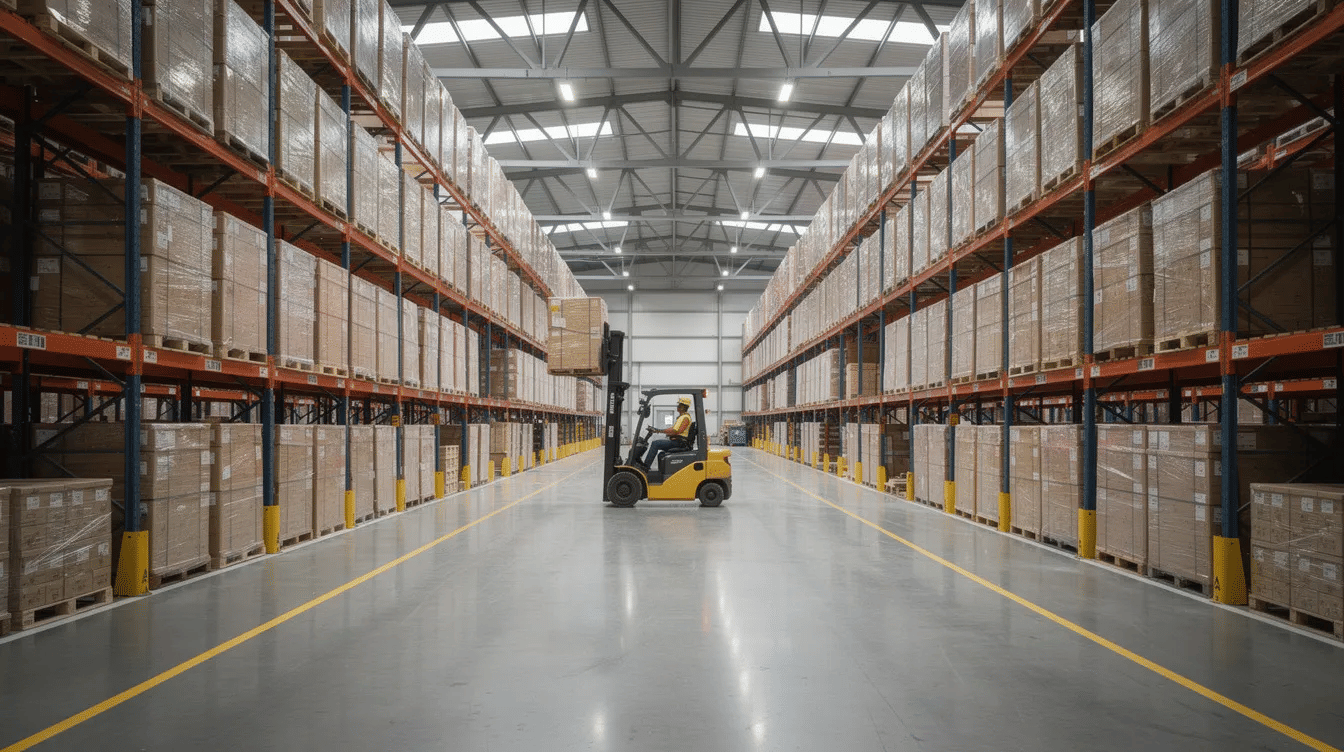
Full-Lifecycle Pallet Racking Projects: From Concept to Live Operation
Integrity manages the complete process of building or upgrading a pallet racking system in New Jersey. That process typically moves through these phases:
- Discovery - Understanding your inventory mix, order profiles, throughput goals, existing equipment, and building conditions.
- Design and budgeting - Creating warehouse layout concepts with CAD drawings, comparing selective pallet rack against high density storage options, and producing preliminary cost estimates for new and used equipment.
- Engineering and permitting - Coordinating stamped drawings, seismic calculations, and permit applications where applicable under NJ building and fire codes.
- Installation and project management - Scheduling and executing professional installation with qualified crews, including phased work around live operations when necessary.
- Turnover, training, and ongoing support - Delivering load signage, safety accessories, and guidance for future reconfiguration, inspection, or expansion.
Each phase is tailored to the facility. Integrity's approach is consultative, not transactional: the goal is an integrated storage solution that may combine pallet racking, rack-supported mezzanines, shelving, carton flow systems, and custom steel fabrication to support your long-term operational goals. When fire protection, sprinkler layouts, lighting, or conveyor integration come into play, Integrity coordinates with the relevant contractors so the racking system works within the building's actual conditions.
Warehouse Layout & Pallet Rack Design for New Jersey Facilities
Good facility design starts well before the first beam is hung. Integrity's warehouse layout and CAD design services help NJ operators convert clear height, column grids, and dock positions into an optimized pallet racking plan that balances storage density with travel paths and picking productivity.
Proper warehouse design should consider pallet loads, rack elevations, aisle widths, and local code requirements. Integrity's designers also evaluate pallet dimensions, load weights, SKU counts, required pallet positions, forklift type (reach trucks, sit-down counterbalance, turret trucks, order pickers), and building constraints like columns, doors, staging areas, egress routes, and sprinkler layouts. Very narrow aisle racks maximize floor space but require specialized forklift equipment, which is one reason the design process has to account for your current and planned material handling fleet.
With average clear heights in many newer NJ industrial buildings running 32 to 35 feet, there's often significant vertical space that a well-designed layout can capture through taller rack configurations or mezzanine levels. While some providers like Newark Pallet Rack offer a free warehouse design consultation, Integrity ties that design work directly into engineering, permitting, installation, and ongoing support as a single-source provider.
If you're planning new space in hubs like Cranbury, Edison, Carteret, or Secaucus, reach out early in your lease or construction process. Call (201) 848-0054 or use the online contact form to schedule a free consultation and avoid costly redesigns later.
Selective Pallet Racking Systems: The Foundation of Most New Jersey Warehouses
Selective pallet racking is the most common racking system in New Jersey distribution centers, 3PLs, manufacturers, and archive storage facilities. The reason is straightforward: selective pallet racking allows direct access to every pallet position, making it the most flexible option for operations with high SKU variety.
Selective racking is commonly recommended for easy access and flexibility in New Jersey warehouses. It works well when you need frequent line changes, case-pick from pallets, or the ability to store materials of different types and weights across the same system. Installed costs for new selective pallet rack generally range from $80 to $160 per pallet position depending on height, load ratings, and project complexity, with used selective rack materials potentially running $25 to $75 per position.
Integrity designs selective pallet racking layouts using industry-standard teardrop rack as well as other styles, considering beam length (such as the 96-inch beams that are the warehouse industry standard), bay spacing, and upright capacity based on engineered load data. Double deep racking reduces aisle space for more efficient storage by allowing pallets to be stored two deep in certain bays, though it requires reach trucks with pantograph attachments to access the inner pallet.
Integrity also integrates selective rack with wire mesh decking, guard railing, rack labeling, and carton flow shelf levels for split-case picking, creating a more complete storage system rather than rows of standalone steel.
High-Density Pallet Racking: Push Back, Drive-In, and Pallet Flow Rack
Many New Jersey warehouses along the Turnpike corridor turn to high density storage racking when real estate costs make it impractical to expand the building footprint. Pallet flow and push-back systems are advised for higher density and efficient picking in warehouses where the right SKU profiles exist.
Push Back Rack
Push back pallet racking enables high-density storage from one aisle. Push-back racking stores pallets on inclined carts and is often used for high-density storage with LIFO management. Lanes typically hold two to five pallets deep, and the forklift loads and unloads from a single aisle face. Push back pallet racking is designed for high-density storage and works well for bulk SKUs with moderate variety. Installed costs generally range from $150 to $400 per position depending on lane depth and components.
Drive-In and Drive-Through Rack
Drive-in and drive-thru racking maximize storage density and allow forklifts to drive directly into bays, eliminating most aisles. Drive-in pallet racking increases storage by 75 percent compared to selective configurations, and drive-in pallet racking provides storage for 75% more pallets by consolidating large quantities of the same product into deep lanes. Drive-in and drive-thru racking are suited for high-density, FIFO or LIFO needs with restricted forklift access, making them common in cold storage and bulk distribution operations.
Pallet Flow Rack
Flow racking uses gravity for first-in, first-out storage. Pallet flow racking uses inclined roller tracks for FIFO inventory rotation, ideal for high-turnover goods like food and beverage or date-sensitive inventory. The speed of replenishment and picking can be significantly higher than static systems because pallets flow forward automatically.
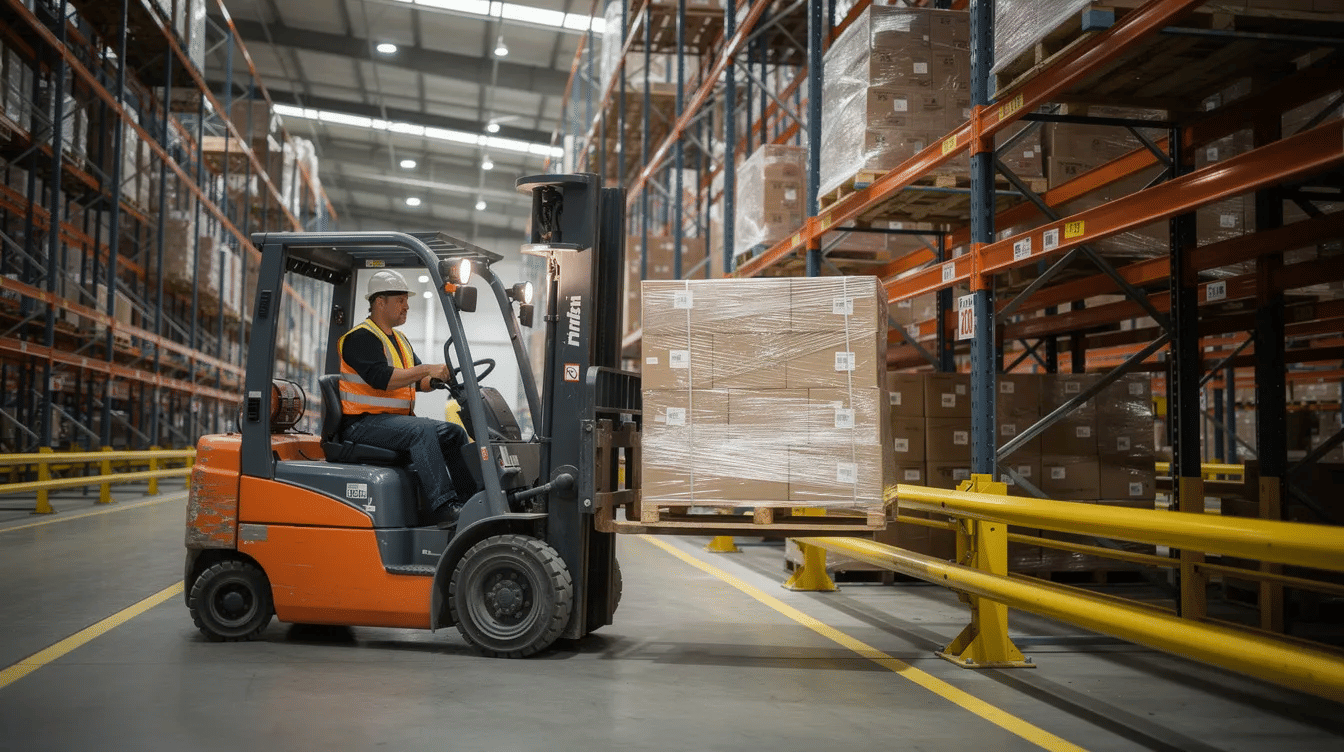
Integrity helps operators compare selective versus high-density options based on SKU profiles, inventory rotation requirements, picking strategy, and forklift fleet capabilities. For example, a 3PL operating chilled storage near Cranbury might use pallet flow rack for perishable inventory to maintain FIFO, while a retail DC in South Brunswick might rely on push back rack for high-volume seasonal products. These are the kinds of trade-offs that Integrity's design process is built to evaluate.
Cantilever Rack and Specialty Racking Systems
Cantilever racking is suitable for long or bulky items like lumber and pipes. Unlike standard pallet racks, cantilever rack eliminates front columns, providing unobstructed access for loading and unloading irregular materials with a forklift. Integrity designs cantilever rack for New Jersey manufacturers, construction suppliers, and building materials distributors, ensuring that upright height, arm capacity, and base dimensions are engineered for the intended loads.
In many facilities around Middlesex County and broader North and Central New Jersey, cantilever rack coexists with standard pallet racking, decked bays, and vertical bar racks in a single layout to support mixed storage requirements. Other specialty solutions-such as carton flow rack, archive storage rack, industrial shelving, and custom fabricated steel structures-can be integrated into a cohesive racking system based on what the operation actually needs to store and how materials move through the building.
Rack-Supported Mezzanines and Pick Modules in New Jersey
When a warehouse is running out of floor space but has unused vertical clearance, a rack-supported mezzanine or multi-level pick module can add usable levels without expanding the building footprint. This approach is especially valuable in land-constrained NJ markets where the U.S. mezzanine market reached $16.1 billion in 2024 and continues to grow.
Integrity helps determine when a rack-supported mezzanine, pallet rack catwalk, or multi-level pick module is appropriate by reviewing order profiles (piece-pick, case-pick, pallet-pick), SKU counts, and throughput requirements. Typical components include pallet rack structure, decking, stairs, landings, handrail, pallet gates, carton flow rack levels, conveyor integration, and lighting coordination. Each design must be engineered around the building's slab capacities, clear height, fire protection, and applicable codes.
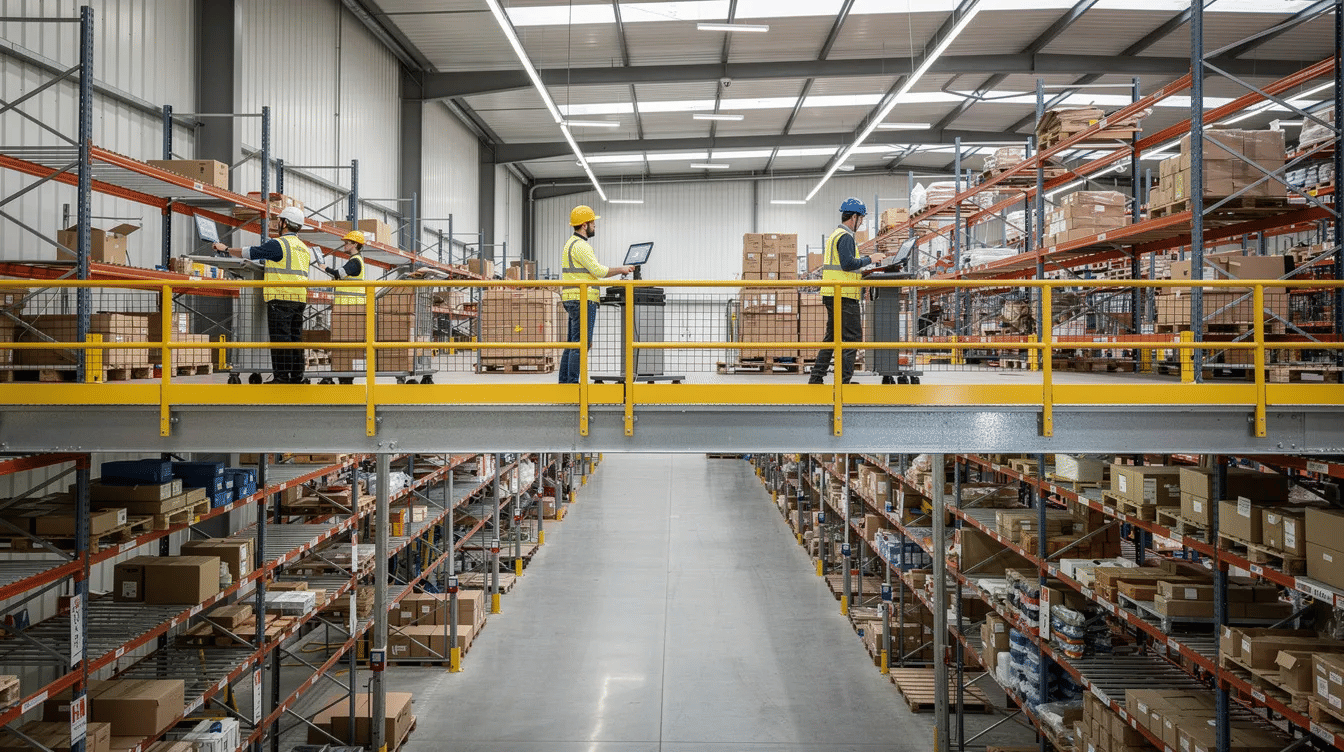
If your NJ facility has vertical space going to waste, call (201) 848-0054 or request a mezzanine or pick module consultation online to explore what's possible within your existing building.
New and Used Pallet Racking Options for NJ Facilities
Integrity provides both new and used pallet racking options, helping facility managers balance budget, lead time, and long-term flexibility while maintaining appropriate safety and engineering standards. Used pallet racks can deliver roughly 30 to 50 percent savings over new steel, which can help customers save money on capital expenditures when project conditions allow.
However, used rack carries risks: mismatched connectors, undocumented capacities, and previous damage that may not be visible without inspection. Integrity inspects used frames, beams, wire decks, and accessories for damage and compatibility before recommending them for a project. The company can also buy back or relocate existing systems during consolidations, reconfigurations, or moves.
When evaluating manufacturers and supply options, some companies like AR Racking offer a 5-year warranty on manufacturing defects, and AR Racking meets MHI and RMI standards for racking systems, which can be an important consideration when sourcing new equipment. Integrity helps customers navigate these choices so that whatever goes into the building meets the project's compliance and performance requirements.
If you're weighing new versus used pallet racking systems, contact Integrity online to review options aligned with your project timeline and budget.
Professional Pallet Rack Installation, Relocation & Reconfiguration
Equipment installation is where design becomes reality. Integrity's qualified crews install pallet racks plumb, anchored, and braced per manufacturer instructions and engineered drawings, with appropriate rack protection and load capacity labeling as specified.
For facilities that need to reconfigure or relocate existing systems, the process is more nuanced. Changing beam elevations, bay spacing, or load patterns can alter structural capacity. RMI capacity calculations depend on factors like maximum unsupported vertical span, and exceeding the recommended height-to-depth ratio can create tipping hazards. Slab load ratings, local building and fire codes, and sprinkler clearance requirements all need evaluation when rack is moved or rearranged. A pre-move rack inspection is essential to identify and reject or repair damaged uprights and components before they go back into service.
Phased installation and teardown can be scheduled around live operations to minimize disruption, including nights, weekends, or staged areas. Integrity manages these logistics in busy distribution markets like Cranbury and Edison, and can disassemble, transport, and reinstall rack systems within New Jersey or between states while coordinating with engineers and local jurisdictions where new permits or seismic calculations may be required.
Engineering, Seismic Calculations, and Permitting Considerations
Pallet racking is an engineered, load-bearing system. Under Section 2208 of the NJ Building Code, industrial steel storage racks must conform to RMI standards and ASCE 7 for seismic design. Pallet racking systems meet MHI and RMI standards, and Integrity coordinates with professional engineers to provide stamped drawings and capacity calculations that account for maximum unsupported vertical spans, height-to-depth ratios, anchoring patterns, and slab capacities.
Most of New Jersey falls under Seismic Design Category B, though areas like Hudson County and the Meadowlands with softer soils may trigger SDC C, which affects baseplate strength, anchoring, and lateral bracing. Permitting review for a complete application often takes around 20 business days in many NJ municipalities, and incomplete documentation is a common cause of delays. Racforce provides NJ-compliant permitting for warehouse solutions, but Integrity's advantage is that permitting coordination is embedded in the same project workflow as design, engineering, and installation rather than handled as a separate engagement.
High-piled storage may involve review by local fire officials, particularly when storage exceeds certain footprint or height thresholds. Integrity helps customers prepare permit applications and documentation but cannot guarantee approvals or timelines, since those depend on the authority having jurisdiction. Each project is unique, and this article is not a substitute for project-specific engineering review.
Rack Safety, Inspections, and Protection Accessories
In high-activity NJ warehouses, damage from forklifts, changing load patterns, or unplanned modifications can compromise system integrity over time. The ANSI MH16.1-2023 standard defines inspection procedures, component damage criteria, anchor strength, and load signage requirements that form the basis for a sound rack safety program.
Integrity's rack safety assessment services include:
- Visual inspections for frame distortions, beam damage, and misaligned uprights
- Evaluation of load signage and capacity plaques
- Review of beam elevations versus original design specifications
- Recommendations for repair, replacement, or reconfiguration
Common rack safety and protection accessories such as column protectors, end-of-aisle guards, wire mesh decking, pallet support bars, and rack netting or backstops can be specified and installed as part of a broader safety plan. Integrity's insights library covers topics like acceptable damage thresholds, rack repair versus replacement decisions, and warehouse safety training. Reach out via the contact page for a rack safety assessment at your New Jersey facility.
Integrating Pallet Racking with Broader Material Handling Systems
Pallet racking rarely operates in isolation. It must integrate with forklifts, pallet jacks, conveyors, packaging lines, dock equipment, and sometimes automation. Integrity evaluates upstream and downstream processes-receiving, put-away, replenishment, picking, packing, and shipping-to design racking that supports overall operational efficiency rather than focusing only on static storage.
Integrity can incorporate shelving and carton flow systems, archive storage, mezzanines, and custom steel fabrication into a unified solution, making it easier for New Jersey operators to carry a single relationship across multiple system types. This integrated approach is especially valuable for fast-growing e-commerce and omni-channel operations in NJ that need to balance bulk pallet storage with high-velocity case and each picking. When speed and throughput matter as much as raw storage capacity, the layout of the racking system affects every step in the supply chain.
Industries and New Jersey Markets Integrity Serves
The NJ market for pallet racking spans a wide range of industries:
| Industry | Typical Rack Needs |
|---|---|
| Third-party logistics (3PL) | Mixed selective, push-back, pallet flow for diverse customers |
| E-commerce fulfillment | Pick modules, mezzanines, carton flow, selective rack |
| Consumer goods distribution | Selective and high-density for case and pallet pick |
| Food and beverage (ambient and cold) | Pallet flow for FIFO, drive-in for bulk cold storage |
| Building materials and industrial supply | Cantilever rack, heavy-duty selective, outdoor storage |
| Manufacturers | Raw materials storage, WIP staging, finished goods |
| Records and archive storage | High-density archive rack, multi-level mezzanine systems |
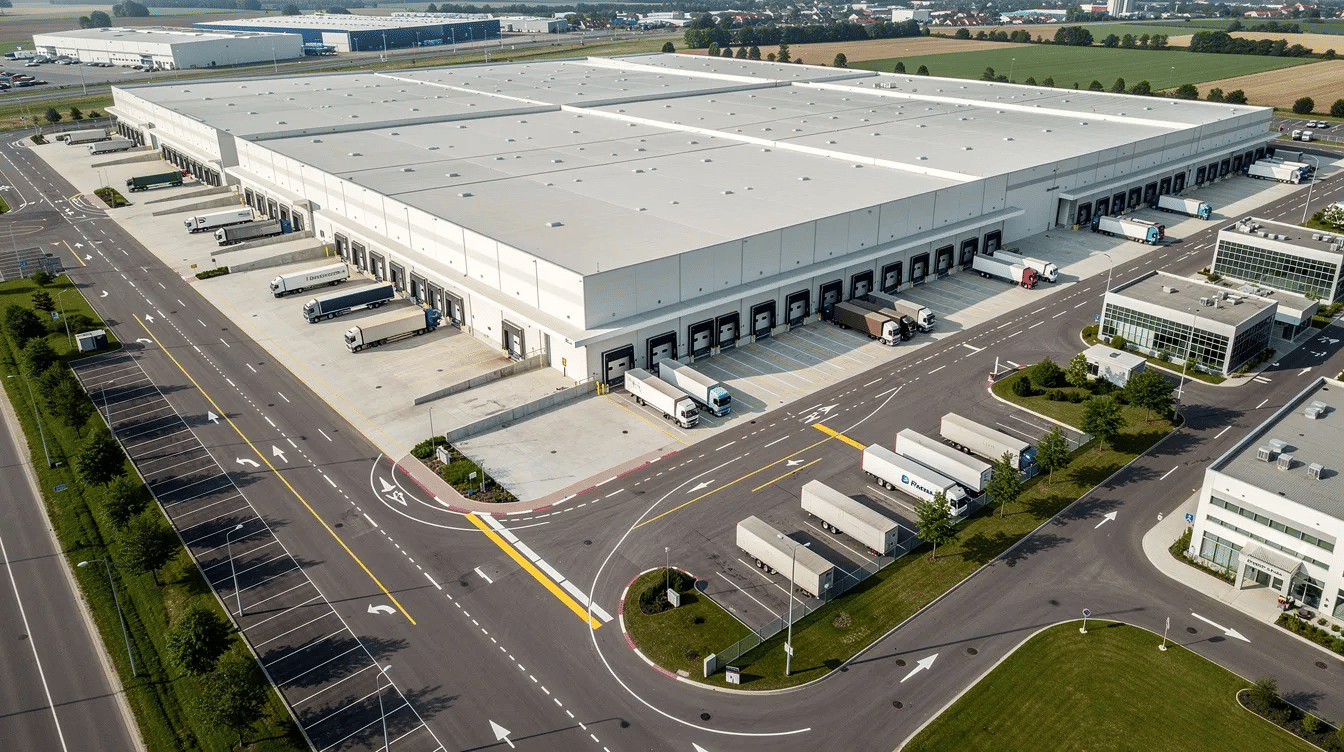
Key NJ logistics hubs where Integrity frequently supports projects include Newark and Elizabeth near the ports, the Exit 8A/Cranbury–South Brunswick corridor, Middlesex County markets like Edison and Piscataway, and other North and Central NJ industrial zones. The market includes established companies across different types of services: East Coast Storage Equipment has provided services since 1994, and Barclay provides full pallet rack design and installation services, among others. Integrity's differentiator is the depth of its turnkey capability, from initial design through construction management and long-term support.
While this article focuses on New Jersey, Integrity also operates in Texas and supports projects nationwide. Multi-facility operators who want consistent pallet racking standards across locations can contact Integrity at (201) 848-0054 or through the project inquiry form to discuss portfolio-wide needs.
How to Get Started on a New Jersey Pallet Racking Project with Integrity
Starting a project with Integrity is straightforward. Here's how a typical engagement unfolds:
- Initial inquiry - Call or submit an online form describing your project.
- Discovery discussion - Integrity's team reviews your inventory, operations, and goals.
- Site visit or drawing review - The team evaluates your building or reviews existing drawings.
- Preliminary layout and budget - You receive a proposed design with cost estimates.
- Engineering and permitting - Stamped drawings and permit applications are coordinated as needed.Installation - Professional crews complete the work on your schedule.
To give Integrity a strong starting point, have these details ready if possible:
- Building location and clear height
- Approximate square footage available for racking
- Current and future pallet counts
- Product types and average pallet weights
- Existing forklift and material handling equipmentTimeline goals
You don't need all the answers up front. Integrity's team can help you determine the right approach, whether that's selective pallet rack, a rack-supported mezzanine, high density storage, or a combination. The process is designed to carry you from first conversation to a complete, operating storage system.
Call (201) 848-0054 to speak with Integrity's team about your New Jersey pallet racking project, or start your project online by requesting a custom quote.
Frequently Asked Questions About Pallet Racking Systems in New Jersey
Do I need a permit for pallet racking in my New Jersey warehouse?
Many NJ municipalities treat pallet racking as a structural installation subject to building and fire code review. Anchored rack assemblies over 5 feet 9 inches in height typically require building permits, and high-piled storage rules kick in when storage exceeds certain footprint or height thresholds. Requirements vary by jurisdiction and project scope. Integrity helps customers understand local expectations, coordinate with engineers, and prepare permit documentation, but final approvals and timelines depend on local authorities.
How long does a typical pallet racking project take from design to installation?
Timelines depend on project size, rack type, engineering and permitting requirements, equipment lead times, and whether the facility is already operating. Smaller selective pallet projects may be measured in weeks. Larger engineered systems-especially rack-supported mezzanines or pick modules-may require longer planning and approval cycles. In many cases, you can expect a response or initial project framework within one business day of your inquiry. Contact Integrity for project-specific scheduling guidance.
Can Integrity reconfigure or expand the pallet racks I already have in place?
Yes. Integrity frequently reconfigures, expands, and relocates existing pallet racking systems, including projects where rack is moved from one NJ building to another or between states. Any reconfiguration should be evaluated by qualified professionals because changing beam elevations, bay spacing, or load patterns can affect structural capacity and compliance. Integrity can inspect the existing system, recommend safe options, and manage the installation work.
Is used pallet racking safe for my New Jersey facility?
Used pallet racking can be safe and cost-effective when components are properly inspected, matched, and configured within their designed capacities, and when the final layout is reviewed for compliance with applicable codes. Integrity helps customers evaluate whether used rack is appropriate, identify damaged or incompatible components, and provide engineering support where needed. The heavy lifting of inspection and verification is part of the process-not an afterthought.
Does Integrity only work in New Jersey and Texas, or can you support other locations?
While Integrity has operations in New Jersey and Texas and focuses much of its work in those states, the company manages pallet racking and mezzanine projects nationwide for customers with single or multiple facilities. If you have projects inside or outside New Jersey, reach out vi a the contact page or call (201) 848-0054 to discuss your specific locations and needs.