Running out of storage space doesn't always mean you need a bigger building. For many Texas warehouse operators, the smarter path forward is reconfiguring the pallet racking they already have. The right layout changes-engineered and installed correctly-can unlock storage capacity, reduce wasted travel, and position the facility for the next phase of growth, all without the cost and disruption of a full relocation.
Key Takeaways
- Texas warehouses can often expand storage capacity and optimize warehouse operations without moving by safely reconfiguring existing pallet racks and related material handling equipment. A properly engineered reconfiguration can improve storage density, streamline pick paths, and adapt to new SKU profiles or order demands.
- Integrity Material Handling Systems Inc. ("Integrity") provides turnkey pallet racking system reconfiguration, rack-supported mezzanine adjustments, layout redesign, engineering, permitting coordination, and professional installation across Texas and nationwide.
- Pallet racking systems are engineered structures. Beam changes, added levels, or moving to a new facility in Texas can impact load capacity, code compliance, and safety-so these projects should be professionally engineered and installed by an experienced team.
- Integrity can help evaluate whether reconfiguring existing pallet racks, adding new pallet racks, or integrating rack-supported mezzanines and pick modules is the right strategy for your Texas facility and long-term growth.
Ready to explore what's possible with your existing space? Call Integrity at (201) 848-0054 or contact Integrity online for a free consultation and custom pallet rack reconfiguration quote.
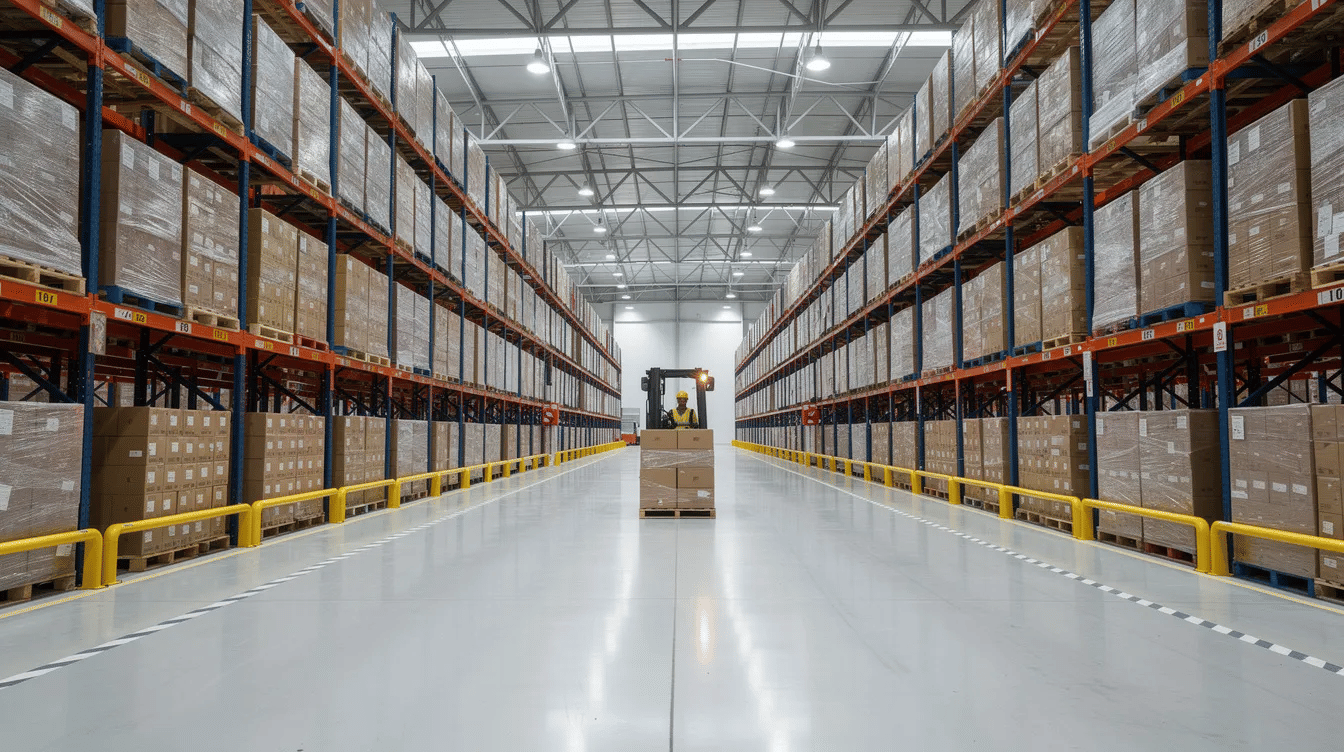
Why Texas Warehouses Are Reconfiguring Pallet Racks Instead of Moving
Across the Lone Star State, the warehouse market is under sustained pressure. Rapidly growing logistics, e-commerce, and manufacturing operations in Dallas–Fort Worth, Houston, Austin, San Antonio, and El Paso are consuming floor space faster than new buildings can come online. Between rising lease rates, tight vacancy, and the sheer cost of moving inventory and equipment, many Texas businesses are asking a pointed question: can we get more out of the building we already occupy?
Pallet rack reconfiguration allows facilities to increase storage density, achieve high-density storage within the existing footprint, improve pick paths, and adapt to new SKUs or order profiles without the cost and disruption of relocating to a new facility. The typical triggers are familiar-SKU proliferation, changes in packaging dimensions, a shift from pallet-in/pallet-out operations to case-pick fulfillment, seasonal inventory surges, or the introduction of new material handling equipment like reach trucks or conveyors.
Compare that to a full relocation: lease negotiation, facility buildout, downtime, moving inventory, retraining staff, and requalifying the operation for customers. Reconfiguration often achieves a meaningful share of those capacity and efficiency gains at a fraction of the time and expense.
Integrity has experience helping Texas warehouses in sectors like consumer goods, building materials, food and beverage, cold storage, and third-party logistics evaluate whether reconfiguration, expansion, or a hybrid strategy is most appropriate for their operations.
Not sure if reconfiguration is right for your facility? Call (201) 848-0054 or request a custom quote online to review whether your Texas warehouse is a good candidate.
What Pallet Rack Reconfiguration Involves (Beyond Just Moving Beams)
Pallet racks are not furniture. They are engineered, load-bearing structures, and any reconfiguration changes the way forces are distributed through uprights, beams, and anchors. Pallet rack reconfiguration requires adherence to engineering guidelines-not guesswork in the field.
Key elements of a reconfiguration project typically include:
- Changing beam elevations to accommodate different pallet heights or product dimensions
- Adding or removing beam levels to increase or decrease the number of storage positions per bay
- Tightening or widening aisles to match new forklift types or optimize your warehouse layout for throughput
- Converting bays to carton flow, shelving, or pick modules for case or each-pick operations
- Redistributing load across uprights, which changes point loads on the slab and anchoring requirements
Different racking system types respond differently to these changes. Selective pallet racks offer the most flexibility for beam repositioning. Drive in systems and push back racks have fixed lane depths and load sequences that constrain reconfiguration options. Very Narrow Aisle (VNA) configurations require precise aisle widths and may need wire guidance or rail systems. Pallet flow racks depend on gravity and lane pitch, limiting how beam levels can be adjusted.
Integrity routinely reviews existing pallet rack engineering data, RMI capacity tables, and upright and beam specifications before proposing any new layout for a Texas warehouse. This is a critical distinction: professionally engineered reconfiguration versus DIY "rack shuffling," where beams are moved without verifying that the resulting configuration is safe, code-compliant, and structurally sound.
Safety, Engineering, and Code Compliance When Reconfiguring Racks in Texas
Safety and compliance come first when modifying pallet racks, especially in high-volume operations and busy distribution centers. The structural consequences of moving beams without checking capacities can be severe, ranging from reduced load ratings to outright collapse.
How Beam Spacing Affects Capacity
The maximum unsupported vertical span-the distance from the floor to the first beam, or the largest gap between consecutive beams-is one of the primary factors that determines upright capacity. Increasing that span reduces the load the upright can safely carry. Pallet racks typically hold between 2,000 and 6,000 pounds per pair of beams, but that rating is valid only for the specific beam elevation and configuration for which the system was engineered.
Height-to-Depth Ratio
The height-to-depth (H/D) ratio is a stability metric defined by the RMI. When that ratio exceeds approximately 6:1 for single rows, special stabilization-anchoring, bracing, or overhead ties-is typically required. Exceeding 8:1 may call for external ties to the building structure or cross-aisle rack connections, unless specifically engineered otherwise.
Key Engineering and Code Considerations for Texas Projects
The maximum unsupported vertical span-the distance
| Consideration | Why It Matters |
|---|---|
| Slab capacity and point loads | Concrete floor assessments are crucial when relocating pallet racks to new coordinates or adding weight to existing locations |
| Anchoring | Pallet racks must be anchored to the floor for safety; adequate anchoring is vital for structural stability during rack reconfiguration |
| Seismic and wind loads | Texas coastal areas may require wind-resistant design; IBC lateral force requirements apply even in lower seismic zones |
| Flue space and sprinkler clearance | Reconfiguration changes flue spaces and aisle widths, directly affecting fire safety compliance |
| Egress and fall protection | Elevated work areas, mezzanines, and pick modules require guardrails, stairs, and clear egress paths |
All reconfiguration work should follow ANSI/RMI MH16.1 specifications for testing and utilization of industrial steel storage racks. You must also maintain compliance with OSHA and RMI standards when altering pallet racks. Compliance with fire safety codes and spacing requirements underlines the importance of treating reconfiguration as an engineered project, not an afternoon task. Many Texas municipalities trigger permit requirements for racks 8 feet or taller, and a Texas-licensed Professional Engineer is typically needed to secure permits for modifications involving structural changes.
Acceptable configurations depend on the specific facility, rack type, loads, local codes, and project-specific engineering. Integrity can coordinate stamped calculations, permitting documentation, and layout drawings where required.
Want to confirm your racks meet current standards? Schedule a rack safety assessment or engineering review with Integrity by calling (201) 848-0054 or submitting details about your existing racking system.
Common Reasons Texas Facilities Reconfigure Pallet Racks
The decision to reconfigure racking rarely comes from a single trigger. More often, it's a combination of pressures that converge until the current layout simply can't keep up.
Growth and inventory changes:
- Rapid SKU growth in fulfillment centers and e-commerce warehouses
- Higher order volumes requiring faster picking and more accessible product faces
- Changes in pallet dimensions or packaging that make existing beam spacing inefficient
- Seasonal or project-based inventory surges that exceed current storage capabilities
Operational friction:
- Poor pick paths, congestion, and excessive forklift travel time
- Underutilized vertical space, especially in buildings with 28- to 36-foot clear heights
- Bottlenecks at dock doors caused by staging constraints
- New warehouse equipment-such as reach trucks or VNA forklifts-that require different aisle widths or clear heights to maximize efficiency
Strategic shifts:
- Consolidating multiple facilities into one Texas distribution hub
- Repurposing part of a building for light manufacturing or value-added services
- Integrating automation such as conveyors, carton flow, put walls, or shuttle systems
Consider a scenario familiar in many Texas markets: a Houston 3PL that originally operated pallet-in, pallet-out bulk storage now needs to support high-velocity case picking for an e-commerce client. The existing layout-wide aisles, pallets stacked three high with no intermediate beams-wastes vertical cube and forces pickers to walk long distances. Reconfiguration can tighten aisles, add beam levels for case-pick slots, and integrate carton flow or shelving in forward pick zones, transforming daily operations without moving to a new space.
If any of these changes sound like your situation, contact Integrity for a free consultation to discuss reconfiguring pallet racks in your existing facility.
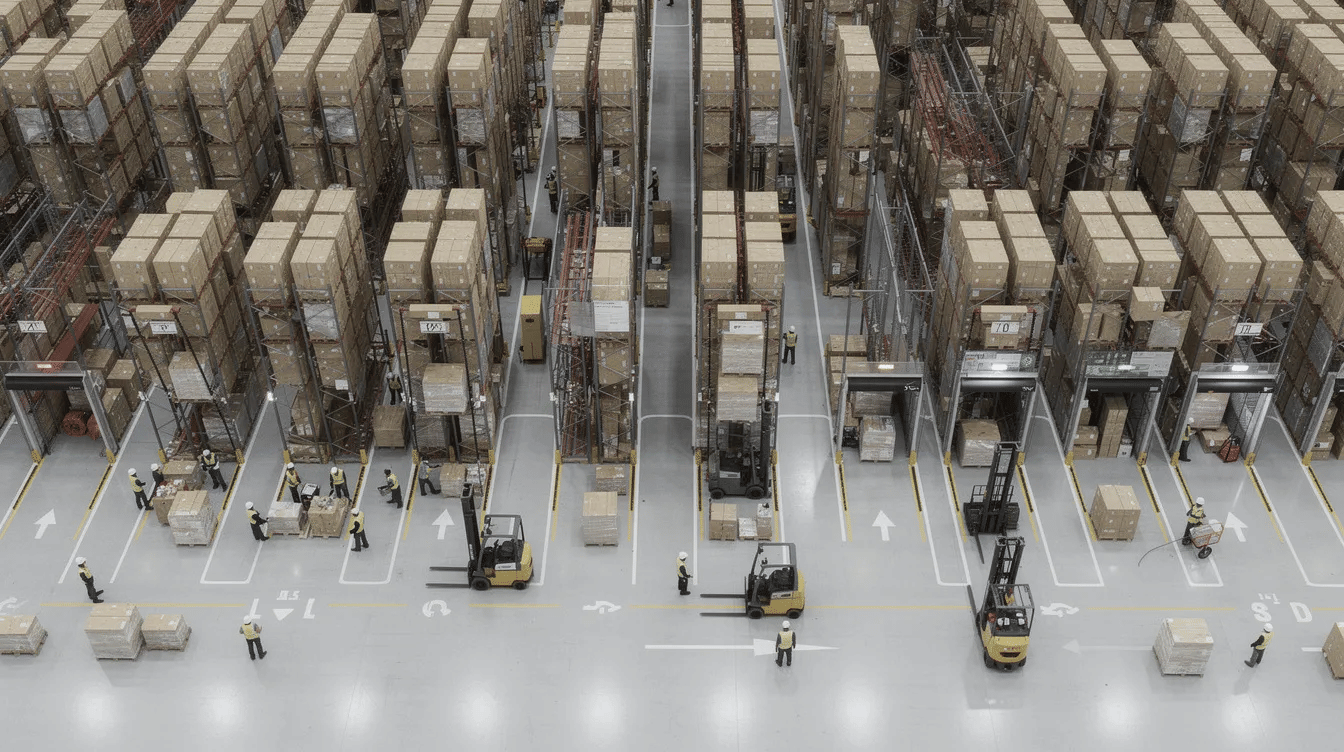
Integrity's Turnkey Pallet Rack Reconfiguration Services in Texas
Integrity Material Handling Systems Inc. is a turnkey warehouse storage and material handling systems provider with operations in Texas and New Jersey, serving customers nationwide. Unlike vendors that only sell equipment or only install it, Integrity manages the full lifecycle of a reconfiguration project.
Core service components for pallet rack reconfiguration include:
- Site assessment and onsite measurement
- Existing rack inspection and condition grading
- CAD layout and design for the new layout
- Engineering review, stamped calculations, and permit coordination
- Equipment sourcing-new pallet racks and quality used storage equipment
- Professional installation and anchoring
- Project management from start to final walkthrough
Integrity works across racking system types as a professional pallet rack provider for industrial storage projects across Texas: selective pallet racks, drive-in and push back racks, pallet flow systems, Very Narrow Aisle racking, cantilever racking, and rack-supported mezzanines and pick modules.
A solution tailored to your operation often means integrating existing equipment with new components, shelving and carton flow systems, and other material handling equipment to create a cohesive storage system around your facility's workflow and throughput targets. The result is a single point of contact for layout design, permitting support, disassembly and relocation, reconfiguration, and final walkthroughs-reducing project risk and coordination burden for your team.
Our Step-by-Step Process for Reconfiguring Pallet Racks
Here's how a typical pallet rack reconfiguration project in a Texas warehouse progresses from first conversation to final inspection.
- Discovery call and free consultation - Integrity's team discusses your storage needs, pain points, timeline, and goals.
- Onsite measurement and rack condition assessment - Field verification of building conditions including slab thickness, column locations, clear heights, and a detailed inspection of existing racking components for wear, damage, and compatibility.
- Storage needs analysis and inventory profile review - Reviewing your inventory type, SKU counts, pallet sizes, pick strategies, inbound and outbound volumes, and equipment requirements.
- CAD layout and engineering review - Developing one or more layout options with beam elevations, aisle widths, rack heights, and zoning strategies. Engineering calculations confirm load capacity, stability, and compliance.
- Phased installation plan - A schedule designed around your operations so work happens in zones, during nights or weekends, or during planned slow periods.
- Disassembly, relocation, and reinstallation - Integrity's crews handle tear-down, staging, transport (if needed), and rebuild. Pallet racking installation can take from one day to a week depending on the scope, and relocation projects can often be completed in a matter of days.
- Final inspection and sign-off - Post-installation safety audits ensure compliance with updated load capacities and safety features. Load plaques are updated, anchors are verified, and the system is ready for operation.
Integrity can also integrate future expansion concepts into the design so the racking system can evolve with the business-adding beam levels, extending runs, or building out mezzanine phases later.
Projects are phased around active operations-nights, weekends, or zone-by-zone work-to keep shipping, receiving, and production running while the reconfiguration progresses.
Ready to get started? Call (201) 848-0054 or submit drawings of your existing pallet rack systems for a custom reconfiguration proposal.
Assessing and Addressing Pallet Rack Condition Before You Reconfigure
Reconfiguring or relocating damaged pallet racks can transfer existing problems into a new layout, risking instability, reduced load capacity, or compliance issues. You should always inspect components for wear before reconfiguring pallet racks.
Typical damage types Integrity looks for in Texas warehouses include:
- Dented, twisted, or bowed uprights
- Bent or cracked beams
- Damaged footplates or anchors
- Missing or incompatible beam connectors and safety clips
- Bent or missing row spacers
- Compromised wire decking
Some damage can be repaired using engineered repair kits, while other components should be replaced outright. The RMI Guidelines for Assessment and Repair or Replacement of Damaged Rack detail how to evaluate severity and make that decision. Regular inspections are essential to ensure pallet rack safety and compliance, and regular inspections of pallet racking systems are recommended every 6 to 12 months.
Integrity can incorporate repairs, replacement parts, and upgrades-such as end-of-aisle protection, column guards, and pallet support bars-as part of a comprehensive reconfiguration scope. A pre-project rack safety assessment helps Texas warehouse operators prioritize which bays or lines must be addressed before any racking changes are made.
Designing a New Layout Around Your Texas Operation
Integrity approaches racking system design with a focus on the client's actual operation-not just the building dimensions. That means understanding inbound and outbound volumes, SKU profiles, picking strategies (pallet, case, each), order cut-off times, and what material handling equipment you're running, whether it's standard sit-down forklifts, reach trucks, or Very Narrow Aisle equipment.
Custom warehouse layouts can maximize storage capacity and workflow efficiency when they're designed around these realities rather than defaulted to a generic grid. Using CAD layouts, Integrity tests different options:
- Aisle widths optimized for your forklift fleet
- Rack heights that take full advantage of available clear height
- Beam spacing matched to pallet and product dimensions
- Slotting strategies that place high-velocity SKUs closer to docks and staging areas
Texas-specific considerations also shape layout decisions. Hot climates in non-climate-controlled buildings may affect product placement or cold storage zone design. High throughput in port-connected markets like Houston demands efficient dock-to-storage flow. Labor constraints in fast-growing metros can push toward layouts that reduce travel time per pick.
Integrity can also design around future automation-conveyors, sorters, pick modules-and coordinate with other vendors when pallet racks must interface with those systems. The goal is a layout your team can see and understand before work begins, through clearly labeled CAD drawings, zone maps, and elevation views. Industries like warehouse design have evolved significantly, and firms like Equipment Depot, with over 80 years of experience in warehouse design, and Pallet Rack Systems, which has managed projects over a million square feet, reflect the depth of expertise available across the industry. Integrity brings this same level of careful planning and execution to every Texas reconfiguration project.
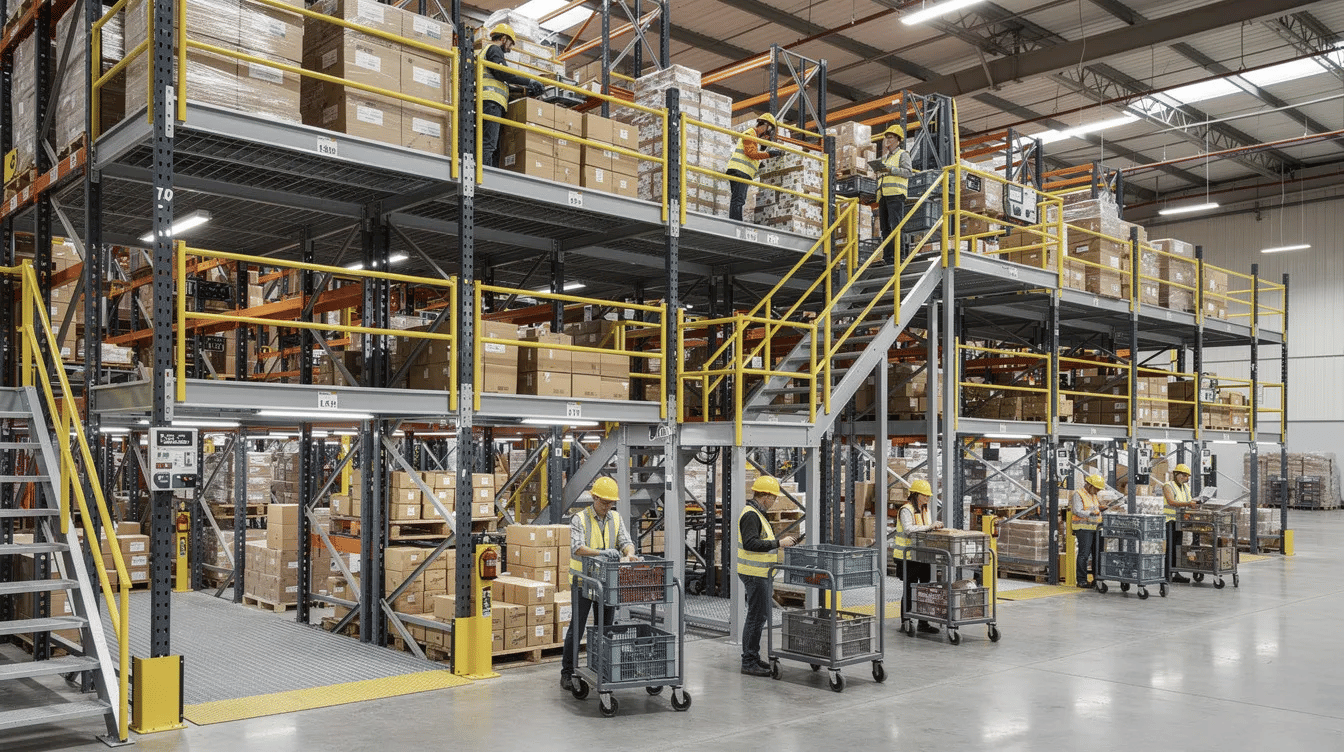
Integrating Rack-Supported Mezzanines and Pick Modules Into a Reconfiguration
For Texas facilities that cannot easily expand their footprint or move to a new location, rack-supported mezzanines and pick modules are among the most effective tools for unlocking vertical space.
A rack-supported mezzanine uses pallet racking or industrial shelving as structural support columns, creating additional levels for storage or order picking. Multi-level pick modules combine rack, carton flow, decking, and conveyors into integrated systems designed for high-SKU, high-throughput fulfillment.
Common reconfiguration scenarios where Integrity might add a mezzanine or pick module:
- Converting a section of selective pallet racks into a rack-supported mezzanine for high-SKU small parts or archival storage
- Building a multi-level pick module to support e-commerce order fulfillment with case and each-pick operations
- Adding a catwalk system to allow workers to pick across two or more racking levels
Key design and safety factors include load ratings for decks and walkways, guardrails and fall protection, egress paths and stair location, required clearances for sprinklers and lighting, and coordination with local building and fire officials. Integrity can evaluate whether adding a rack-supported mezzanine or pick module during a pallet rack reconfiguration will help a Texas facility make better use of its vertical cube while maintaining safe, efficient warehouse operations.
Reconfiguring Racks When You Move to a New Facility in Texas
Many Texas companies are upgrading to larger buildings along major corridors like I-35, I-10, and I-45, and want to reuse as much of their existing pallet racking system as possible. The good news: with careful planning, much of that steel can travel with you. The catch: existing configurations are rarely "plug and play" in a new facility.
Key planning steps for pallet rack relocation and reconfiguration:
- Inventorying all rack components-uprights, beams, wire decking, spacers, accessories
- Labeling and bundling for organized transport
- Evaluating compatibility with the new building's clear heights and column spacing
- Determining what additional new pallet racks or components are needed for the new space
Professional crews ensure safe dismantling of pallet racks, and Integrity's teams handle disassembly, staging, loading, transportation, and reinstallation. CAD layouts for the new location are developed before the move so relocated pallet racks can be installed efficiently. Pallet rack relocation can be completed in a few days when properly sequenced, though larger projects naturally require more time.
Beam elevations, aisle widths, and rack runs typically need to be redesigned to match the new space and applicable Texas code requirements. What worked in your old building may not satisfy the height-to-depth ratios, slab loads, or fire code clearances in the new facility.
Planning a move to a new facility in Texas? Speak with Integrity early in the process by calling (201) 848-0054 or submitting project details online so reconfiguration and relocation can be built into your move plan.
New and Used Pallet Racks to Support Your Reconfiguration
Pallet rack reconfigurations often require additional beams, uprights, wire decking, row spacers, or accessories beyond what's already in the building. Texas offers new and used pallet racking systems through a range of suppliers, and Integrity can source both to fit your project.
New pallet racking systems enhance storage efficiency by matching current engineering standards and providing full manufacturer load data. Used pallet racks provide cost-effective storage solutions when they're in good structural condition and compatible with your existing system. In many cases, a hybrid approach-reusing existing components alongside new or quality used equipment-is the most practical path.
Integrity's inventory and dealer network can help Texas facilities fill gaps in existing systems, match major rack brands and styles, and avoid mixing incompatible components that could cause safety or capacity issues. Available systems include selective pallet racks, push back and pallet flow systems, cantilever racking for long or bulky items, and specialty storage equipment tailored to the operation.
Used pallet racking is evaluated for structural integrity, damage, and brand compatibility before Integrity recommends it as part of a reconfiguration. This process helps manage project budgets without compromising quality or safety.
Prospective customers can request pricing for new pallet racks and quality used equipment as part of their reconfiguration quote via Integrity's contact page.
Managing Downtime and Phasing During a Live Reconfiguration
Many Texas warehouses run multiple shifts and cannot afford to shut down operations during a reconfiguration. Minimizing downtime requires more than fast delivery of materials-it requires careful planning and precise coordination.
Practical phasing strategies include:
- Working in zones so the rest of the warehouse continues operating
- Building new pallet rack runs before tearing down old ones
- Shifting inventory temporarily to buffer areas or off-site staging
- Scheduling disruptive work during nights, weekends, or planned slow periods
Integrity's project management capabilities include coordination with warehouse management, carrier schedules, and production or fulfillment teams to reduce disruption to inbound and outbound activities. For example, a phased reconfiguration in a San Antonio distribution center can be designed to keep 80 to 90 percent of pallet positions active throughout the project by sequencing work zones around the facility's busiest lanes and dock doors.
Communication plans, safety barriers, signage, and temporary operating procedures keep employees safe while work crews reconfigure racking nearby. The goal is to maintain safe separation between construction activities and daily operations at all times.
How Pallet Rack Reconfiguration Helps Optimize Your Warehouse
The primary operational benefits of effective pallet rack reconfiguration go beyond simply adding more storage positions:
- Better vertical cube utilization - raising beam levels, adding tiers, or installing mezzanines to use more of your building's clear height
- Improved pick paths and travel times - reorganizing slotting so fast-moving SKUs are closer to docks and staging
- More logical separation of fast-moving and slow-moving inventory types
- Improved workflow efficiency through better dock-to-storage flow and reduced congestion
Optimization is not just about density; it's about aligning pallet rack systems, mezzanines, shelving, and storage equipment with the facility's actual inventory profile and throughput requirements. Well-designed reconfiguration can support future initiatives-automation, value-added services, or new customer contracts-by creating more flexible and scalable storage zones.
Integrity does not guarantee specific capacity or efficiency increases. Instead, the company focuses on designing code-compliant, operationally appropriate racking systems around each facility's constraints and goals, delivering solutions that improve efficiency through better design and sound engineering.
Need to optimize your warehouse in Texas? Contact Integrity for a customized plan to optimize your warehouse using pallet rack reconfiguration, rack-supported mezzanines, and related solutions.
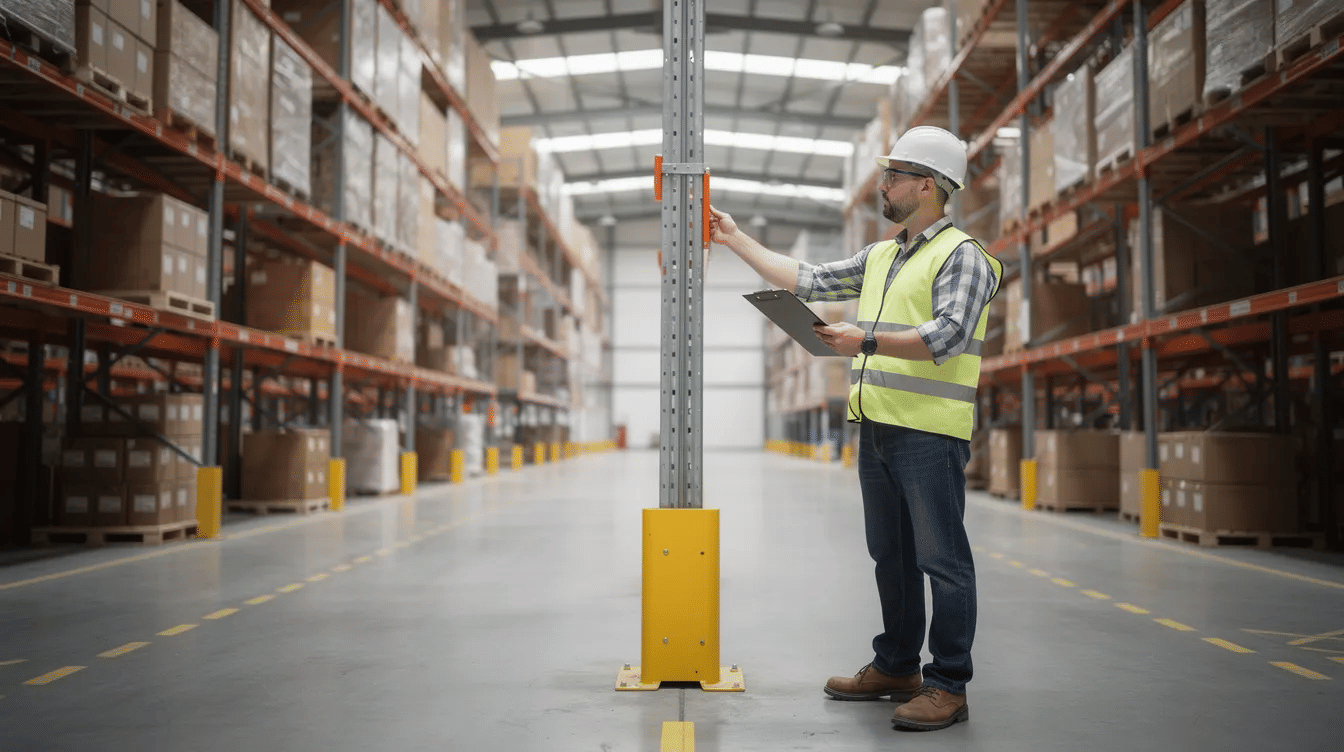
Why Texas Warehouses Partner With Integrity for Pallet Rack Reconfiguration
Integrity is not a one-time pallet rack vendor. The company functions as a long-term partner with end-to-end capabilities-from initial design through rack installation and ongoing support.
Key differentiators:
- Turnkey service model covering every phase of reconfiguration and relocation
- Deep expertise in pallet racking, rack-supported mezzanines, and pick module systems
- Ability to integrate new and used equipment into a single cohesive system
- Custom steel fabrication capabilities for non-standard applications
- Nationwide project reach with operations in Texas and New Jersey
- Expert team experienced with 3PLs, manufacturers, fulfillment operations, distribution centers, and archive storage facilities
Clients get a single point of contact for warehouse layout and CAD design, engineering and permitting coordination, disassembly and relocation, professional installation, rack safety assessments, and future expansion projects. That single-source approach frees your team to focus on running the business while Integrity handles the complexity of the reconfiguration.
Speak directly with Integrity's team by calling (201) 848-0054 or request a custom pallet rack reconfiguration proposal online.
FAQs About Pallet Rack Reconfiguration in Texas
How do I know if my existing pallet racks can be safely reconfigured?
The answer depends on several factors: the rack manufacturer and model, current and proposed beam elevations, upright condition, load capacities, and applicable codes in your Texas jurisdiction. Pallet rack systems typically hold between 2,000 and 6,000 pounds per pair of beams, but that rating is specific to the engineered configuration. Never move beams or add levels based solely on appearance. Instead, have a qualified provider like Integrity review engineering data, inspect the racking, and confirm acceptable configurations. Facility managers can schedule a rack safety assessment or consultation with Integrity via the online contact page.
Can I keep operating my warehouse while my pallet racks are being reconfigured?
Many Texas warehouses remain operational during reconfiguration by using phased work zones, temporary storage areas, and off-shift work. The specifics depend on facility layout, volume, and safety requirements. Planning ahead with Integrity's project managers allows you to sequence work around peak shipping and receiving times and develop temporary operating procedures and safety barriers. Pallet racking installation can take from one day to a week depending on scope, and phased approaches spread that work across the schedule to protect operations.
Do I need permits to reconfigure my pallet racking system in Texas?
Many Texas municipalities treat pallet racking, rack-supported mezzanines, and other rack systems as building or structural components. Many Texas municipalities trigger permit requirements for racks 8 feet or taller. Requirements vary by jurisdiction and project scope; factors may include rack height, anchoring method, seismic and wind-resistant design requirements, and fire protection and egress considerations. Because Texas lacks a statewide building permit office, you should consult local building authorities for specific requirements. Work with a provider like Integrity that can help coordinate with local building officials and provide the necessary layouts and engineering documentation for the permitting process.
Is it better to buy new pallet racks or reuse my existing system when I reconfigure?
The right choice depends on the condition and brand of existing racks, the new layout requirements, project budget, and timing. In many cases, a hybrid approach-reusing existing components alongside new or quality used equipment-is most practical. Integrity evaluates the condition of existing pallet racks, checks for damage and compatibility, and then recommends whether to reuse, repair, or replace components as part of a broader layout and engineering review. Request a customized recommendation and quote from Integrity by submitting details about your current system and goals via the online contact form.
How far in advance should I start planning a pallet rack reconfiguration project?
Texas warehouse operators should begin planning several months before a target go-live date, especially if the project involves permitting, significant layout changes, or relocation to a new space or new facility. Early planning allows time for data collection (inventory profiles and throughput analysis), engineering review, equipment sourcing, and scheduling around peak seasons or major customer commitments. Contact Integrity at (201) 848-0054 as soon as you begin considering a pallet rack reconfiguration so options and timelines can be evaluated before space constraints become critical.