When your New Jersey warehouse runs out of room but your inventory keeps growing, the answer usually isn't a bigger building. It's a smarter storage system. High-density pallet racking systems can transform how your facility stores and moves product, turning underused cubic space into productive pallet positions. This guide covers everything warehouse operators need to know about high-density storage options, how they compare to standard selective pallet rack, and how Integrity Material Handling Systems Inc. helps facilities across New Jersey, Texas, and nationwide plan, engineer, and install the right system for their operation.
Key Takeaways
- Integrity designs and installs engineered high-density pallet racking in New Jersey-particularly Middlesex County and surrounding distribution markets-to increase pallet positions and maximize storage capacity without expanding your building footprint.
- Multiple high-density racking options are available, including drive-in pallet racking, push-back racking, pallet flow racking, pallet shuttle systems, and integrated mezzanine and pick module solutions. The right system is selected based on SKU profiles, throughput requirements, and required level of direct access.
- Integrity provides turnkey services covering warehouse layout and CAD design, engineering and seismic review, permitting support, professional installation, rack reconfiguration and relocation, and ongoing rack safety assessments.
- The "right" high-density storage solution depends on facility conditions, inventory, material handling equipment, and applicable codes. Integrity helps evaluate options before committing to a design.
- Ready to explore high-density pallet racking for your warehouse? Call Integrity at (201) 848-0054 or contact Integrity online to discuss your project.
Why High-Density Pallet Racking Matters for New Jersey Warehouses
Many New Jersey warehouses face high real estate leasing and property costs, especially across Middlesex County, Cranbury, Edison, Carteret, Piscataway, and the New Jersey Turnpike corridor. Adding square footage is expensive. In many cases, it's not even an option. That puts pressure on warehouse operators to extract every available pallet position from their existing floor space and vertical clearance.
High-density pallet racking refers to storage systems designed to reduce aisle space and increase the number of pallets stored per square foot. Unlike standard selective pallet rack-where each pallet position is directly accessible from an aisle-high-density systems typically store pallets multiple levels deep, trading some direct access for significantly greater storage density. High-density pallet racking systems increase storage capacity in warehouses, improve storage support for inventory management and supply planning, and are effective for maximizing vertical space that often goes unused in conventional layouts.
The operations that benefit most in this region include:
- E-commerce fulfillment centers in Middlesex County managing seasonal inventory fluctuations that necessitate the strategic use of high-density systems
- Regional distribution centers in Cranbury and Robbinsville handling high volume product flow
- Cold storage facilities where every cubic foot of refrigerated space carries a premium
- Manufacturers along I-287 staging raw materials and finished goods
- Third-party logistics providers along the Port Newark–Elizabeth and Port Jersey corridors meeting rising fulfillment demands
High-density pallet racking systems accommodate the logistical needs of high-turnover markets and can support both LIFO (last-in, first-out) and FIFO (first-in, first-out) inventory control methods through different types of rack configurations-pallet flow, push-back, drive-in, shuttle, and more.
To discuss a high-density storage plan for your New Jersey or regional facility, call (201) 848-0054 or request a custom high-density storage plan online.
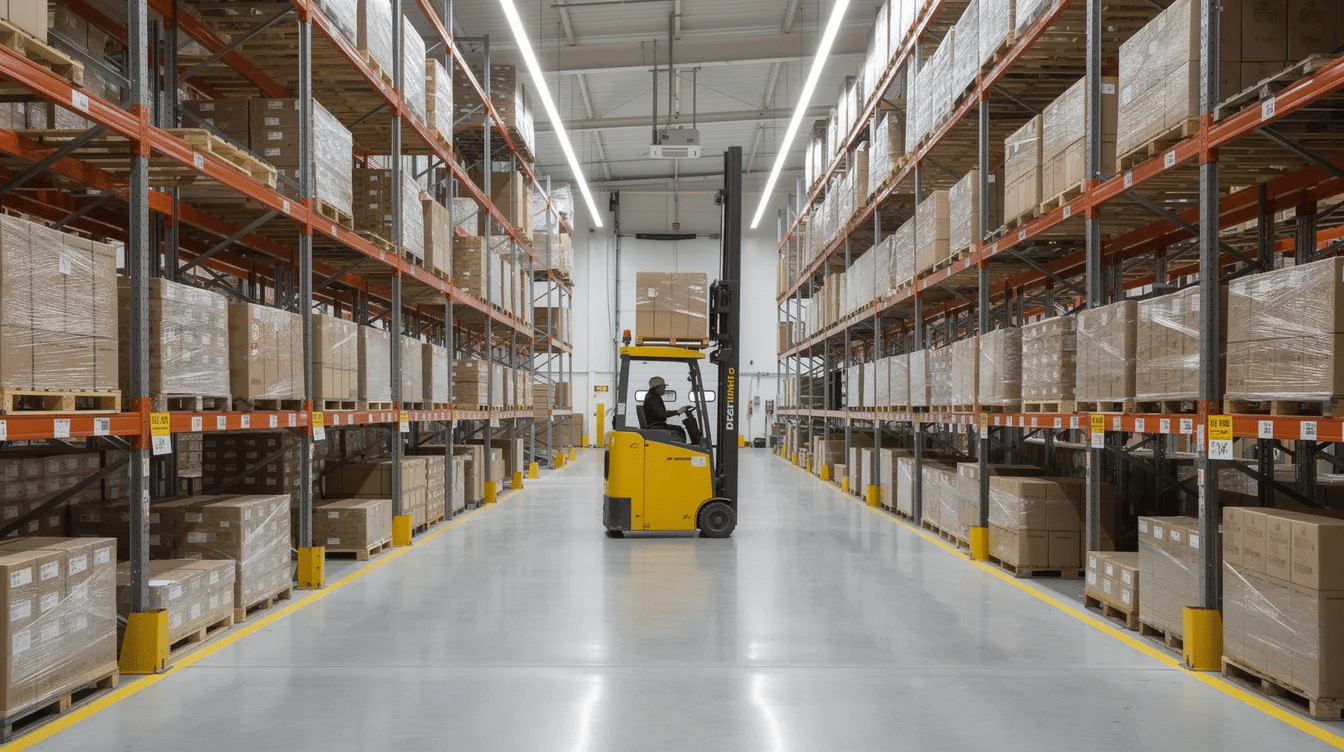
How Integrity Approaches High-Density Storage Projects
Integrity Material Handling Systems Inc. is a turnkey warehouse storage and material handling systems provider with operations in New Jersey and Texas, serving customers nationwide. Integrity is not simply a rack vendor-the company supports every phase of a warehouse storage project, from initial concept through engineering, equipment sourcing, installation, and ongoing system maintenance.
Integrity's assessment process for a high-density project typically includes:
- An on-site walk-through to review current operations, building constraints (columns, dock positions, clear height, sprinkler systems), and existing rack conditions
- Review of pallet dimensions, weights, SKU velocity, seasonality, and inventory rotation requirements (FIFO vs. LIFO)
- Evaluation of material handling equipment (forklift types, mast heights, turning radii)
- CAD-based warehouse design comparing high-density concepts-drive-in, push-back, pallet flow racking, pallet shuttle systems-and selective pallet rack blended into hybrid layouts
High-density racking systems often involve upfront design considerations for safety and code compliance. Integrity's process includes engineering, seismic calculations (where applicable under New Jersey's Uniform Construction Code), and permit application support to help align systems with local building and fire codes. The choice of high-density racking system depends on the inventory profile, and high-density racking solutions can be tailored for specific operational needs. Proper analysis, engineering, and system customization improve accessibility, reduce travel distance across the facility, and support optimal performance.
Where the project calls for it, Integrity can incorporate rack-supported mezzanines, pick modules, shelving, and carton flow into the broader warehouse design-so high-density pallet storage can coexist with intensive picking or case-level fulfillment operations.
How Integrity Approaches High-Density Storage Projects
Traditional selective pallet rack gives every pallet position direct access from an aisle. It's the most flexible configuration, ideal for operations with many SKUs and frequent picks. But that flexibility comes at a cost: selective rack typically uses 50% or more of floor space for aisles.
High-density storage systems optimize space by limiting aisles. Here's how the tradeoff plays out:
| Factor | Selective Pallet Rack | High-Density Pallet Racking |
|---|---|---|
| Direct access | Every pallet position | Typically front-face or lane-end only |
| Aisle space required | High (one aisle per rack row) | Low (fewer, shared aisles) |
| Density per sq ft | Lower | 50–90% more positions possible |
| Best for | High SKU variety, fast picks | Bulk reserve, same SKU depth, seasonal |
| Inventory rotation | Flexible (FIFO or LIFO) | System-dependent (FIFO, LIFO, or both) |
High-density pallet racking systems improve cubic capacity by reducing aisle space. In a central New Jersey warehouse, converting a section from selective to push-back or drive-in racking might increase pallet positions from roughly 3,000 to 4,500 or more in the same footprint-though actual results depend on the facility layout, product mix, and engineering requirements.
High-density systems often reduce forklift travel distance and increase picking efficiency, particularly in reserve storage zones. Many facilities keep selective pallet rack in fast-pick or mixed-SKU zones and add high-density racking in reserve or bulk storage areas. Integrity helps determine the right balance between high density and direct access based on your SKUs, service levels, and handling equipment rather than pushing a single rack type.
Mobile pallet racking, another high-density option, can increase storage capacity by as much as 48% in certain applications by eliminating fixed aisles entirely.
Drive-In and Drive-Through Pallet Racking in New Jersey
Drive-in pallet racking is one of the most cost-effective high-density pallet solutions available. In a drive-in system, forklifts enter the rack structure itself to place and retrieve pallets on rails along deep lanes-typically four to ten pallets deep. Drive-through configurations allow access from both ends of the lane, enabling FIFO rotation.
Drive-in racking is ideal for low-turnover products or bulk storage scenarios such as:
- Large production runs of the same SKU
- Seasonal product staging
- Slow- to medium-rotation inventory that does not require high selectivity
Drive-in racks are ideal for low-turnover products and can deliver 60–80% greater space utilization compared to selective rack. Drive-in systems are commonly deployed in New Jersey food and beverage distribution centers, cold storage operations, and manufacturing warehouses where storage space is at a premium.
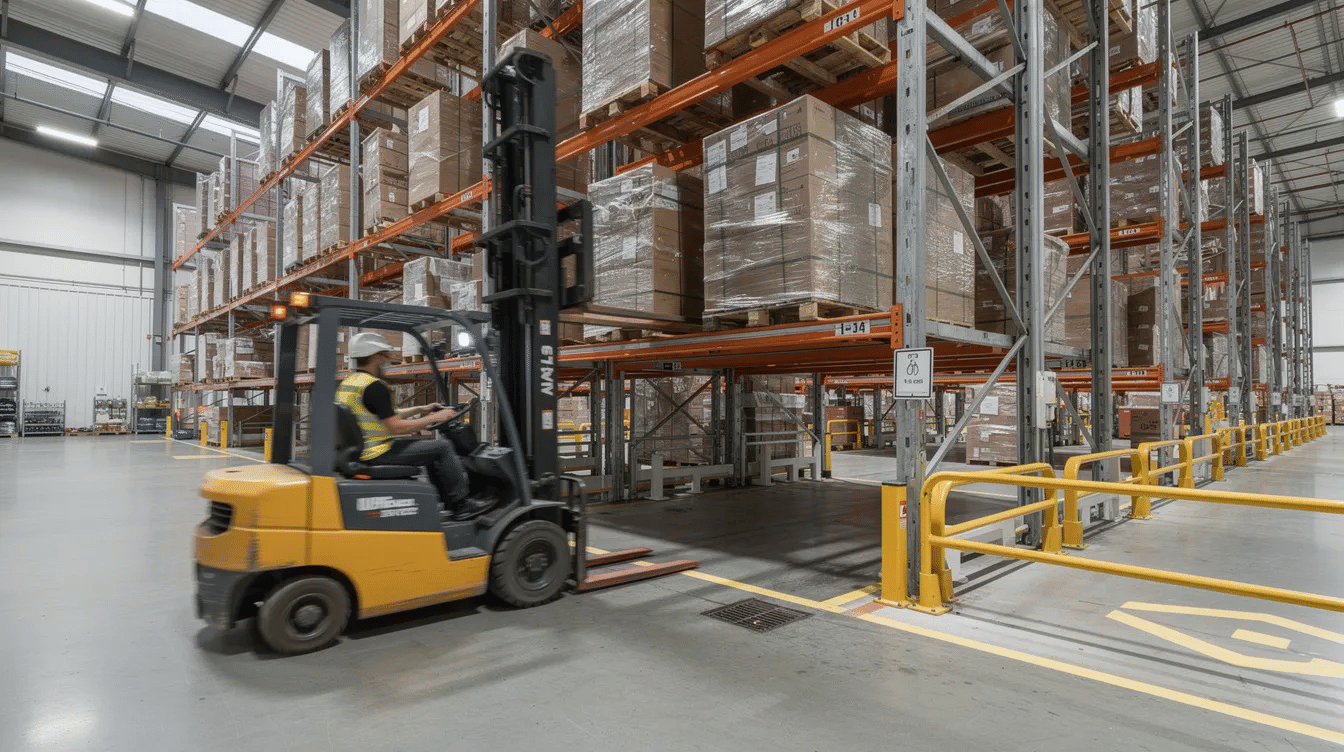
Design considerations include lane depth, height-to-depth ratios, rail protection, pallet quality, and the importance of engineered impact protection and proper anchoring. Because forklifts operate inside the rack structure, drive-in systems carry higher risk of rack damage-making rack protection accessories and regular inspection essential. Changes to beam rail elevations or load profiles should always be engineered and reviewed to maintain structural integrity and compliance.
Push-Back Pallet Racking for LIFO High-Density Storage
Push-back racking is a high-density racking option that provides multiple pallets per lane-typically two to six deep-with last-in, first-out storage access from a single aisle. Push-back racking allows multiple pallets per lane for efficient selectivity at the pick face, and the forklift never enters the rack structure.
The system works on inclined rails or nested carts: loading a new pallet "pushes back" the existing pallets in the lane. When the front pallet is removed, the remaining pallets roll forward by gravity. This increases storage density while maintaining relatively good selectivity compared to drive-in racks.
Ideal inventory profiles for push-back include:
- Medium-turn SKUs with several pallets per product
- Production buffer stock
- Retail distribution where pallet-level LIFO rotation is acceptable
In a comparative layout study, a 4,000 square foot area fitted with push-back racking yielded approximately 1,200 nominal positions with around 90% utilization (roughly 1,080 usable positions), while drive-in in the same area provided about 1,050 positions at roughly 70% utilization (approximately 735 usable). Push-back can deliver more usable capacity even with fewer nominal positions due to better lane selectivity.
Integrity can source new or used push-back systems when appropriate, engineer load capacity specifications, manage professional installation, and recommend rack safety accessories. High-density systems improve inventory flow and reduce travel distance, and push-back integrates well alongside selective or pallet flow rack in other zones of the warehouse.
Pallet Flow Racking for FIFO and Temperature-Controlled Operations
Pallet flow racking is a gravity-fed system where pallets load from the back of the lane and automatically roll forward to the front pick face. Pallet flow racks support first-in, first-out inventory rotation, making pallet flow a leading high density pallet solution for operations requiring strict date or lot control.
Pallet flow racks support FIFO inventory management and are especially valuable in:
- Refrigerated and frozen food warehouses across New Jersey
- Pharmaceutical and nutraceutical facilities with lot-controlled inventory
- Beverage distribution centers needing strict expiration-date compliance
High-density layouts using pallet flow can lead to reduced energy costs in refrigerated storage, because more product is stored per cubic foot of cooled space-reducing the overall facility footprint that must be maintained at temperature. According to industry data on cold storage racking, moving to pallet flow or push-back from selective rack in freezer operations can yield 10–20% improvements in storage density.
Design considerations for pallet flow include lane slope (typically around 4–6%), roller type, braking systems to control pallet speed, pallet quality and consistency, and coordination with fire protection and flue-space requirements. Final designs must follow engineering standards and applicable codes-including the provisions of ANSI MH16.1 and local fire marshal requirements for high-pile storage.
Integrity evaluates whether pallet flow racking, selective rack, or another high-density system best supports a given SKU mix and throughput before recommending a solution.
Pallet Shuttle and Deep-Lane High-Density Storage
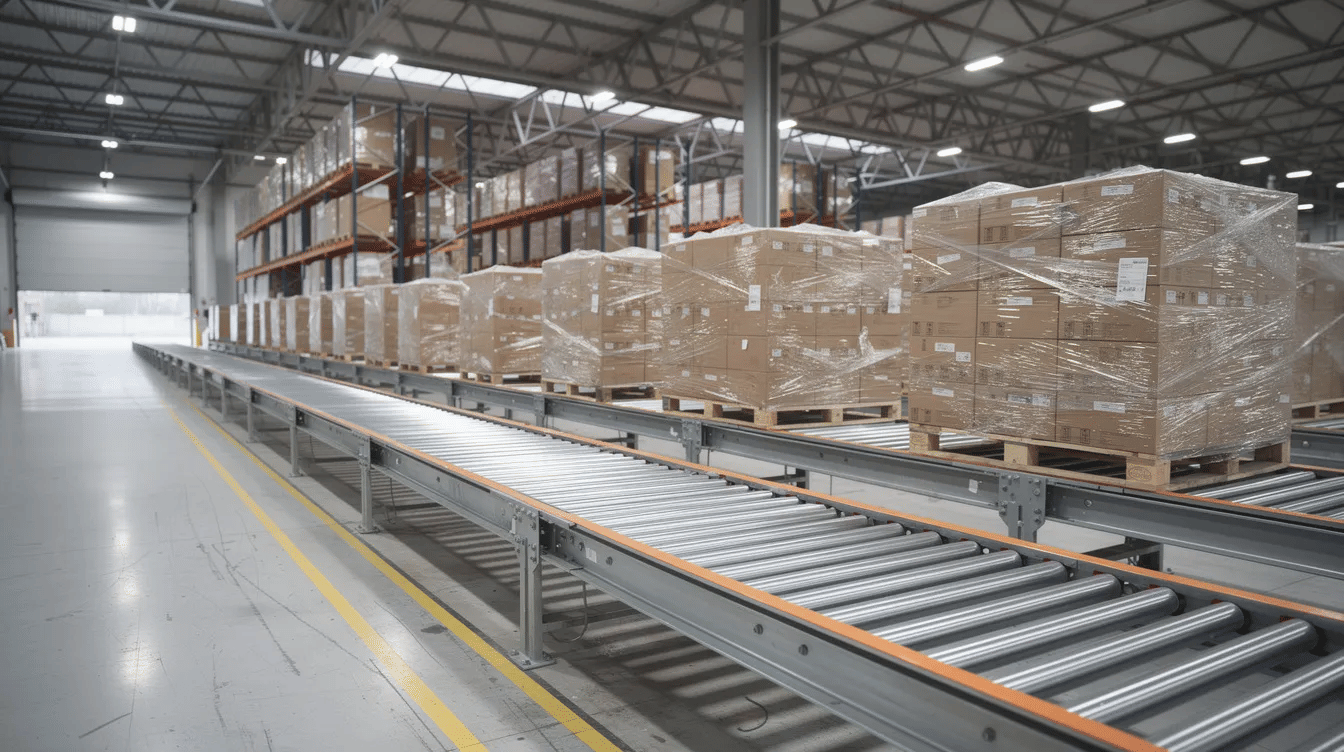
A pallet shuttle system is a semi-automated high-density storage option where a motorized shuttle moves pallets within deep lanes-sometimes dozens of positions deep-controlled by a forklift operator or integrated with a warehouse management system (WMS).
Benefits in large New Jersey and regional distribution centers include:
- Extremely high storage density in compact floor space
- Reduced forklift travel inside rack lanes
- Better control over pallet sequencing (supporting both FIFO and LIFO configurations)
- Potential integration with broader warehouse automation
Unlike drive-in systems, forklifts do not enter deep lanes with shuttle-based configurations, which can improve safety and reduce rack damage when properly designed and installed. However, shuttle systems involve additional engineering, electrical coordination, and controls integration.
Integrity's project management capabilities-including coordination with OEMs, electricians, and fire-protection contractors-support the complexity of shuttle-based installations. Whether a semi-automated shuttle, traditional high-density racking, or a hybrid configuration makes sense depends on your budget, labor conditions, throughput targets, and growth plan. Integrity helps facilities evaluate these variables before committing to a system.
Integrating High-Density Pallet Racking with Mezzanines and Pick Modules
Many New Jersey warehouses blend high-density pallet storage with rack-supported mezzanine or pick module systems to increase both pallet positions and picking capacity in the same footprint. A well-designed shelving system improves accessibility, and vertical integration of storage levels can dramatically improve how your facility uses its available clear height.
Rack-supported mezzanines and multi-level pick modules can sit over or adjacent to pallet rack, creating multiple usable levels for case picking, e-commerce fulfillment, or archive storage while reserving ground-level positions for high-density pallet storage. This approach is especially common in:
- Records storage facilities needing maximum carton locations
- E-commerce operations combining pallet reserve with case-level order fulfillment
- Multi-tenant warehouses where different storage needs coexist
Integrity brings deep experience in rack-supported mezzanine systems, pallet rack catwalks, and integrated pick modules. The company's custom steel fabrication capabilities also allow solutions to work around existing building constraints-columns, bracing, fire protection lines-that standard components can't accommodate.
Planning a combined high-density pallet and mezzanine or pick module project? Call (201) 848-0054 or schedule a design consultation online.
Designing a High-Density Pallet Layout for New Jersey and Texas Markets
While this article focuses on New Jersey-Middlesex County, Cranbury, Woodbridge, South Brunswick, and nearby markets-Integrity applies the same design principles to major Texas markets (Dallas–Fort Worth, Houston, San Antonio, Austin) and customers nationwide.
Strategic layout planning reduces wasted space in warehouses. The layout design process includes:
- Mapping rack runs around columns, dock doors, conveyors, and staging areas
- Balancing high-density zones with selective or carton flow areas for active picks
- Planning for future expansion or reconfiguration
- Accounting for egress, fire sprinkler clearances, and material handling equipment paths
Local factors shape these decisions. New Jersey's high real-estate costs push operators toward maximum density in existing buildings, while Texas greenfield development may offer higher ceilings and larger footprints but different seismic and climate considerations. Port or intermodal proximity-common in both markets-drives high inbound volume and the need for efficient staging and storage.
Integrity produces detailed CAD drawings, elevation views, and rack load application and configuration documentation to support both internal planning and permitting. Capacity improvements are potential outcomes dependent on project-specific design, engineering, and code considerations-not guaranteed percentages.
Installation, Reconfiguration, and Relocation of High-Density Racking
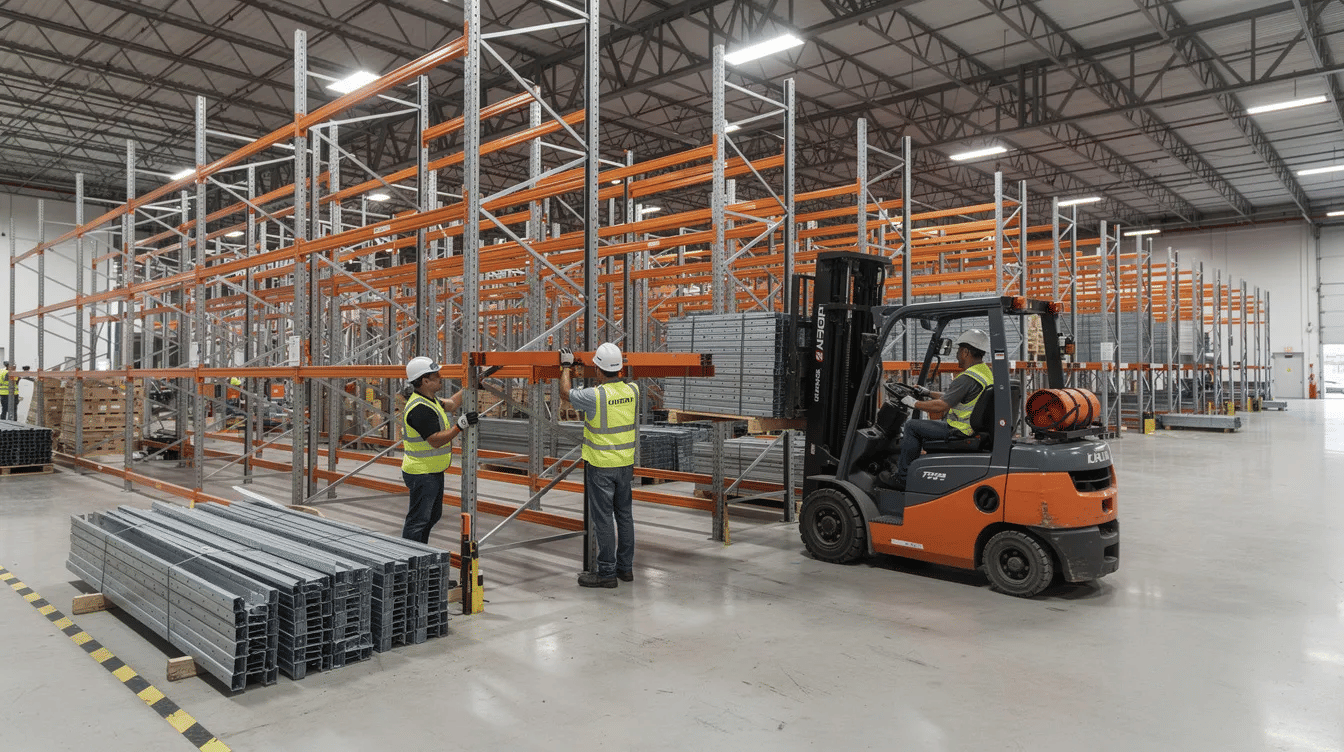
High-density pallet racking systems are engineered, load-bearing structures that must be installed, modified, or relocated carefully to maintain structural integrity and code compliance. Professional installation ensures safety and compliance standards are met, and installation services include dismantling and relocating existing systems when a facility is reconfiguring or consolidating.
Integrity's turnkey services for high-density racking include:
- Professional installation of new and used rack systems
- Disassembly, relocation, and rack system reconfiguration
- Coordinated project scheduling to limit operational downtime
- Phased implementation so warehouses can maintain throughput during transitions
Key engineering concerns during reconfiguration or relocation include changes to beam elevations and load distributions, height-to-depth ratios (generally not exceeding 6:1 without anchors or overhead ties), slab capacity and anchor bolt integrity, seismic requirements in applicable zones, and coordination with fire protection and egress requirements. Installation timelines vary; larger projects may take several days or weeks depending on complexity.
Integrity's teams complete rack safety assessments before and after moves, replace damaged components, and integrate new and used rack where appropriate. The company's published insights on safely reconfiguring pallet rack and evaluating acceptable rack damage reflect this depth of subject-matter expertise.
Safety, Compliance, and Rack Inspections for High-Density Systems
Increasing storage density concentrates loads and can affect egress paths, fire protection effectiveness, and seismic performance. High-density racking must be engineered with safety and compliance in mind from the start. Local code requirements should be confirmed before high-density racking installation begins.
Key compliance areas include:
- Adherence to Rack Manufacturers Institute (RMI) guidelines and ANSI MH16.1 standards for structural design and load capacity
- Load sign posting on all rack systems
- Maintenance of vertical and horizontal flue spaces for sprinkler effectiveness
- Coordination with local building officials and fire marshals, particularly for high-pile storage configurations exceeding 12 feet in height
- Seismic anchorage and bracing per ASCE 7 and applicable building codes
Integrity offers rack safety assessments, engineering support, and assistance with permit applications. Actual code requirements and approvals are determined by the jurisdiction and project-specific engineering-not by a one-size-fits-all checklist.
Operational safety is equally important. Training lift-truck operators to work safely around drive-in, push-back, and pallet flow rack is critical. Rack protection accessories-column guards, end-of-aisle protectors, guide rails-reduce impact damage. An ongoing inspection and repair program helps catch problems before they become structural failures.
Integrity can serve as a long-term safety partner, helping evaluate damage, determine whether to repair or replace components, and plan phased upgrades to high-density storage systems.
New vs. Used High-Density Pallet Racking Options
Both new and properly vetted used pallet rack can play a role in building cost-effective high-density storage systems. The choice depends on availability, condition, and engineering requirements.
When used rack may be appropriate:
- Expanding an existing system with compatible uprights and beams
- Budget-sensitive projects or short- to medium-term facility setups
- Leasing arrangements that can provide flexibility for temporary or growing warehouse needs
When new rack is often preferable:
- Custom heights, depths, or configurations required by the layout
- Specific seismic engineering requirements
- Specialized finishes for freezer or corrosive environments
- Projects requiring components not readily available on the used market
High-density systems (drive-in, push-back, pallet flow, shuttle) often involve more project-specific engineering and components than standard selective rack. Integrity evaluates used equipment carefully for load capacity, compatibility, and condition before recommending reuse. RackUSA has over 50 years of storage-rack manufacturing expertise, but regardless of manufacturer, any used components must meet current engineering and code requirements for the intended application.
Integrity can also purchase used pallet rack from customers who are reconfiguring or consolidating locations, helping offset some project costs.
Considering used vs. new high-density racking in New Jersey or Texas? Call (201) 848-0054 or request a tailored recommendation online.
Industries and Facility Types That Benefit from High-Density Pallet Racking
High-density racking is not limited to any single sector. It applies wherever pallet storage demand outpaces available floor space. Representative industries and operations in and around New Jersey and Texas include:
- E-commerce and omnichannel fulfillment centers
- Regional and national distribution centers for food, beverage, consumer goods, and home improvement products
- Cold storage and temperature-controlled facilities
- Pharmaceutical, nutraceutical, and personal-care manufacturing
- Records management and archive storage facilities
- Third-party logistics providers and cross-dock facilities
Example: A Middlesex County distributor handling refrigerated goods added pallet flow lanes in its bulk reserve zone to maintain FIFO rotation for dairy products, gaining substantially more usable positions in that section while keeping selective rack in its active picking area. In Texas, a 3PL deployed drive-in racking for high volume bulk inventory in a greenfield distribution center, reserving push-back and selective zones for mixed-SKU clients.
High-density pallet racking systems aid in meeting rising fulfillment demands in warehouses across these sectors. Integrity's experience spans small single-site warehouses through multi-facility networks, and project scopes range from a single high-density rack bay to complete greenfield facility designs.
Why Choose Integrity for High-Density Pallet Racking Projects
When a warehouse operator or facility manager evaluates high density pallet solutions, the question isn't just which rack to buy-it's who can help plan, engineer, source, install, and support the entire system. Integrity Material Handling Systems Inc. is a company built to serve as that project partner.
Key differentiators:
- Turnkey capabilities from concept and CAD design through engineering coordination, permitting support, equipment sourcing, and professional installation
- Experience in both pallet racking systems and rack-supported mezzanine and pick module systems, enabling integrated solutions under one provider
- Ability to work with new and used equipment, plus custom steel fabrication when standard components don't fit existing building constraints
- Local knowledge of New Jersey and Texas warehouse markets, paired with nationwide project execution
- Ongoing support after install: rack safety assessments, repairs, reconfiguration, and future expansion planning
Integrity's track record spans warehouses, distribution centers, manufacturers, archive storage facilities, and other industrial and commercial facilities. The company's approach to streamline operations and deliver storage solutions aligned with each facility's operational needs has earned the trust of clients ranging from startups to Fortune 500 companies.
Planning a high-density pallet racking or broader warehouse storage project? Call (201) 848-0054 or contact Integrity's team online to start the conversation.
Getting Started with a High-Density Pallet Racking Project
The first step is usually a conversation about what's driving the project-pallet overflow, limited dock staging space, long forklift travel times, an upcoming product launch, or a lease renewal that makes expansion impractical. High-density racking maximizes storage capacity without expanding footprint, and the process of getting there starts with understanding your current challenges and growth expectations.
Before speaking with Integrity, it helps to gather:
- Pallet dimensions and maximum load weights
- SKU counts and velocity breakdowns (fast, medium, slow movers)
- Current rack layout or floor plan (if available)
- Building clear height and column spacingAny known building or code constraints
From there, Integrity's engagement typically follows this path: initial discussion, site visit or virtual review, preliminary layout options with high-level budget ranges, and then detailed engineering and installation planning once a direction is selected.
Projects can be phased-starting with critical high-density zones and expanding later-to reduce disruption and spread capital investment over time. This is common in facilities that need to maintain operations during the process of conversion.
Whether you're in New Jersey, Texas, or another U.S. market, call (201) 848-0054 or request a custom high-density pallet racking quote online when you're ready to explore options.
Frequently Asked Questions About High-Density Pallet Racking
How do I know if my warehouse is a good candidate for high-density pallet racking?
Facilities experiencing pallet congestion, renting off-site storage, or planning to add SKUs without expanding square footage are often strong candidates. Operations with groups of identical or similar SKUs, predictable production runs, or large volumes of reserve stock typically see the most benefit from high-density configurations. An Integrity walkthrough or layout review can help determine whether high-density racking, mezzanines, or other solutions are appropriate for your specific building and operation.
Will high-density racking slow down my order picking or shipping operations?
The impact on speed depends on system choice and layout. Some solutions-like pallet flow racking-can actually reduce travel and improve throughput by consolidating pick faces. Others-like deep drive-in lanes-are better suited to reserve storage than fast picking. Integrity designs systems around both storage and material handling requirements, often combining high-density pallet storage in reserve zones with selective or carton flow systems in active pick and shipping areas. Simulation of travel paths and throughput assumptions during design helps minimize any negative impact on operational efficiency.
What information do engineers need to design a safe high-density pallet rack system?
Key data includes pallet dimensions, maximum pallet weight, product characteristics (shrink-wrapped cases, drums, etc.), lift truck types and mast heights, building clear height, slab thickness and condition (if known), and location for potential seismic or wind considerations. Authorities having jurisdiction may also require fire-suppression details, flue-space information, egress routes, and product hazard classifications as part of the permitting process. Integrity coordinates with structural and fire protection engineers as needed to develop designs that align with applicable codes and project-specific requirements.
Can my existing pallet rack be converted into a high-density system?
In some cases, existing uprights and beams can be reconfigured or combined with new components to create higher-density zones, but this must be evaluated carefully for capacity and compatibility. Changes in beam elevations, bay configurations, or load patterns can affect rack capacity, so professional review and new engineering may be required. The choice depends on what's already installed, its condition, and whether it meets current standards. Contact Integrity to schedule a rack safety assessment or layout consultation to determine what is practical and safe to reuse in your specific facility.
How long does it typically take to implement a high-density pallet racking project?
Timelines vary widely based on project size, complexity, permitting requirements, and equipment lead times. Smaller projects may be completed in weeks once equipment is available, while large multi-phase installations-especially those involving mezzanines or automation-may extend over several months. Contact Integrity early in your planning process so design, engineering, and scheduling can be aligned with your production calendar, peak season, or facility move dates.